

Public API
Blueputto Public API lets approved tools connect to your organization, manage documents and objects, and keep integrations secure with API keys.
 Grzegorz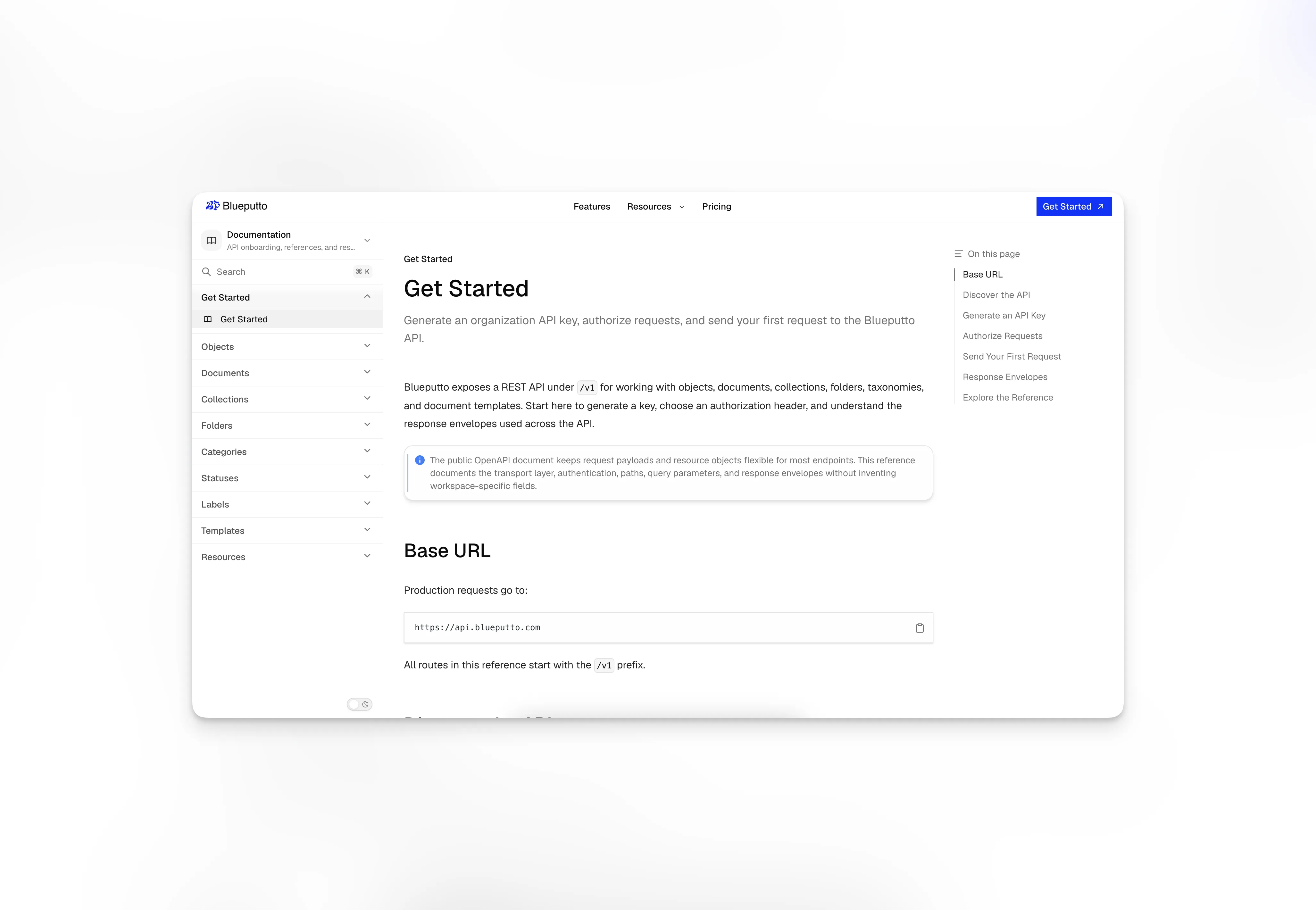
The Public API lets another approved tool work with information in your Blueputto organization. It is useful when you want to avoid copying the same records by hand between systems.
This feature is intended for developers, but its purpose is simple: give your organization a controlled way to connect Blueputto with the tools it already uses.
Work with the main parts of Blueputto
An integration can work with:
documents and templates,
objects and collections,
folders,
categories, statuses, and labels.
Depending on the type of record, it can read information, add something new, update it, move it to Trash, restore it, make a copy, or change its order.
Start with an API key
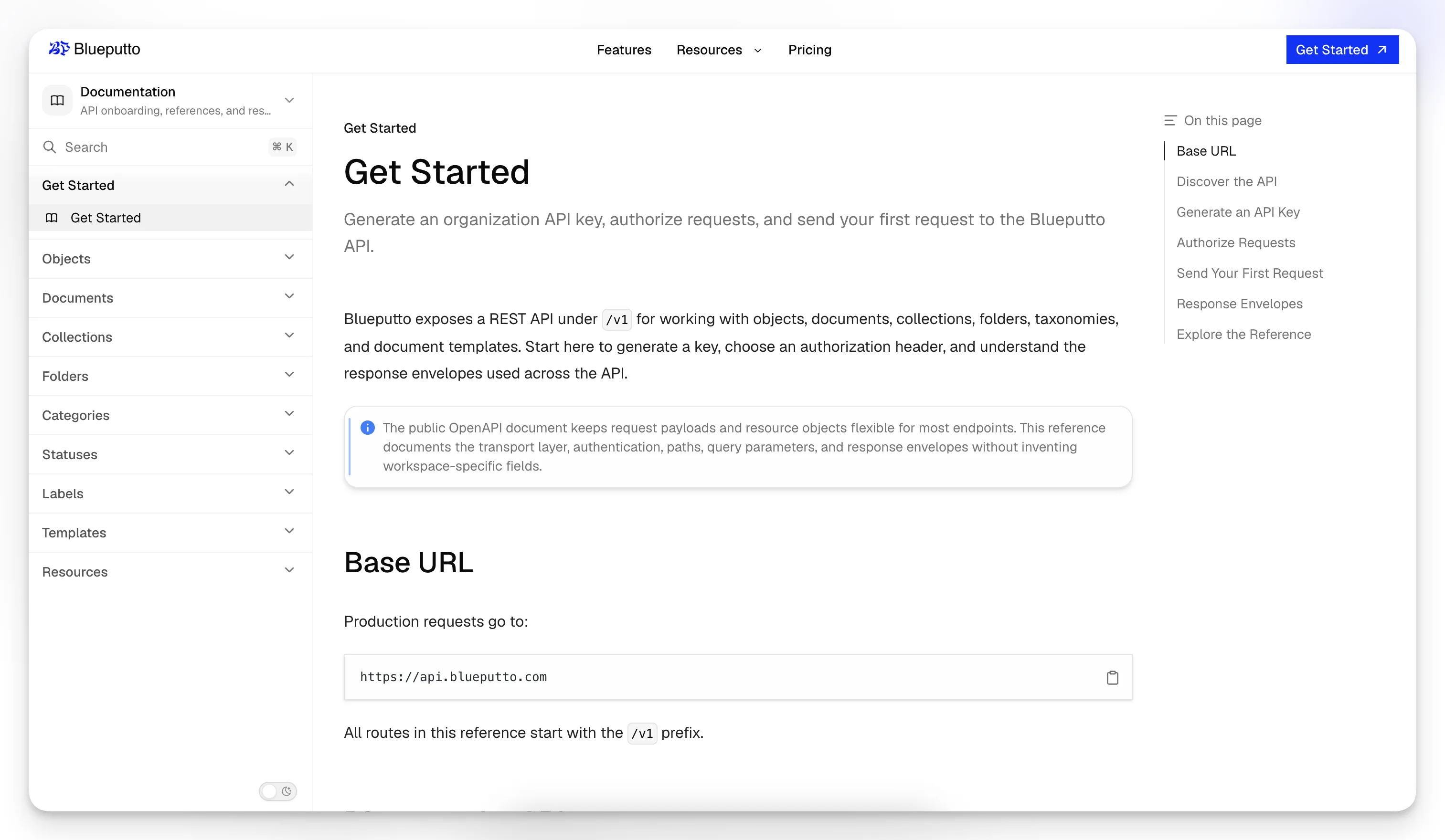
Create a named key in API Keys and copy it when it is shown. The developer setting up the connection then uses that key to identify the organization.
Blueputto provides an OpenAPI description and reference documentation, making it easier to explore the available actions and connect common development tools.
Build dependable connections
Lists can be read a page at a time and narrowed to the records an integration needs. Blueputto uses the same general patterns across different kinds of content, so a connection is easier to understand and maintain.
The same safety rules still apply. For example, removing an object or document follows the Trash workflow, and a document under signature cannot be edited as if it were an ordinary draft.
Keep access under control
Use a separate key for each integration and give it a name your team will recognize. If a connection is retired or a key may have been exposed, delete that key without affecting other integrations.
API access is available on the Scale plan.