

Blueputto Museum
Blueputto Museum is a demo museum created to showcase the capabilities of the platform and demonstrate how museums can present, organize, and share their collections online.
Chinese Needlework: Reading Between Lace and Embroidery
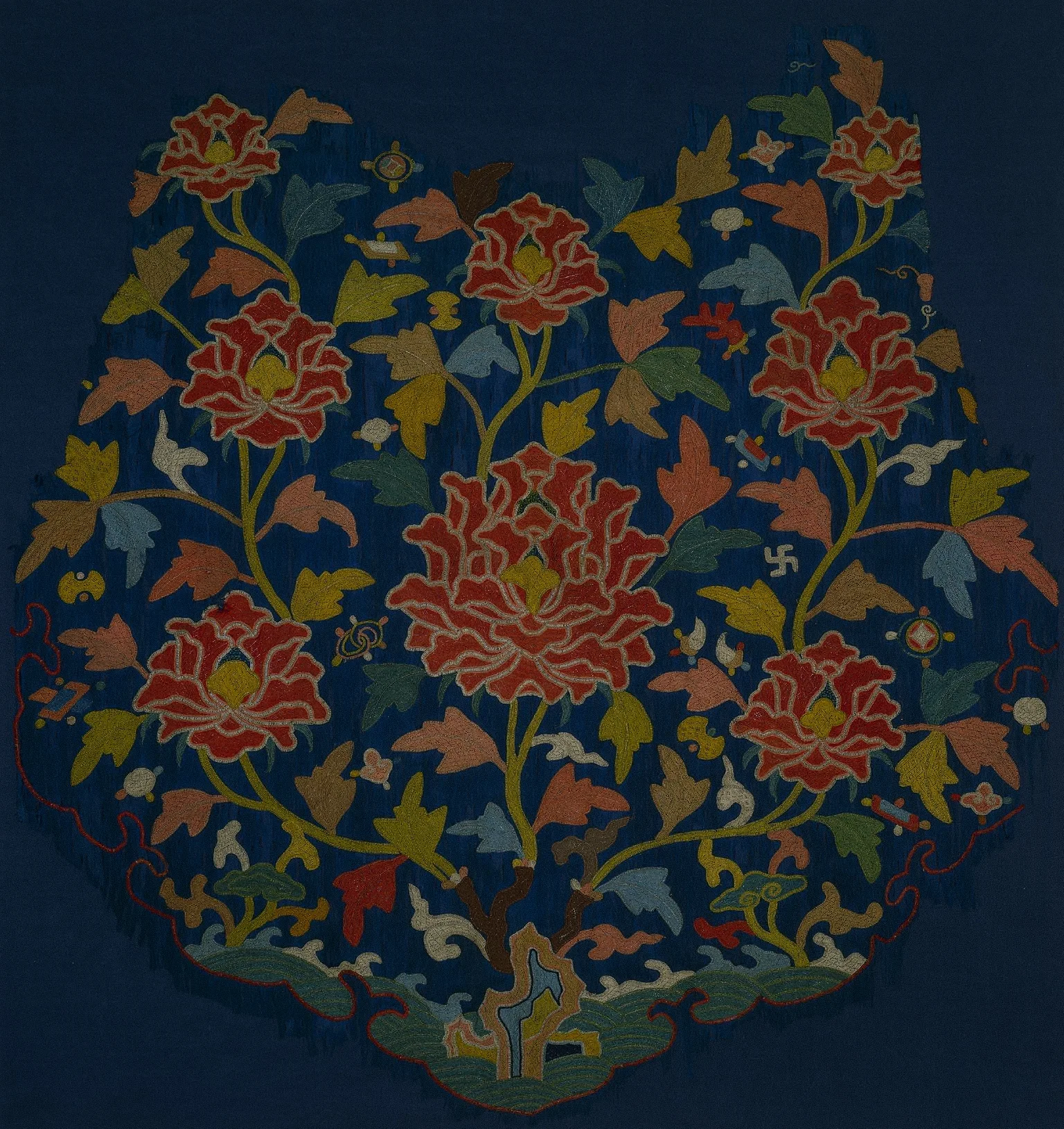
Embroidery from a Cloud Collar: Ocean, Rocks, and Peonies
Cleveland Museum of Art Object Description Against a deep blue satin ground, a peony tree emerges from an undulating sea. This embroidery was made using the needle looping technique, in which rows of detached loops are worked over silvered paper, attaching the ground only along the contours of the design. The design is filled with auspicious symbols, including the peony symbolizing wealth and honor, and the rock (shoushi 壽石) symbolizing longevity. There are small Buddhist symbols among the flowers, including the wheel of the law, a pair of conch shells representing the sounds of the Buddha’s teachings, and a swastika, an auspicious symbol signifying good fortune introduced into China from India with Buddhism.
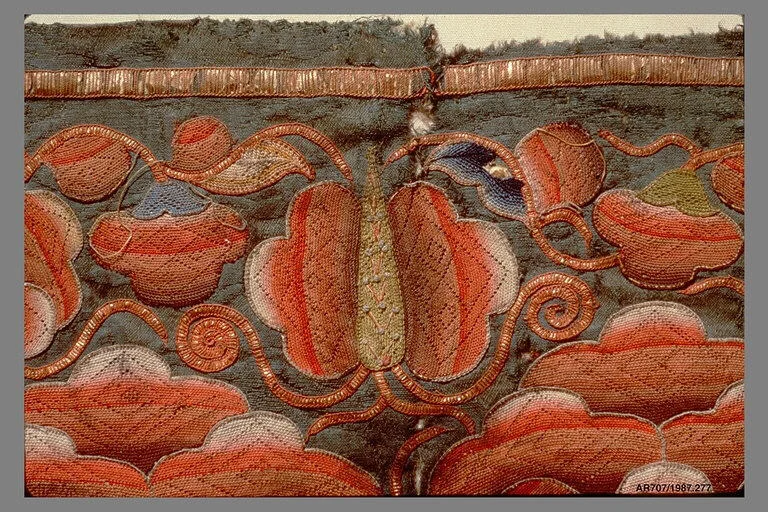
Panel with Peonies and Butterfly
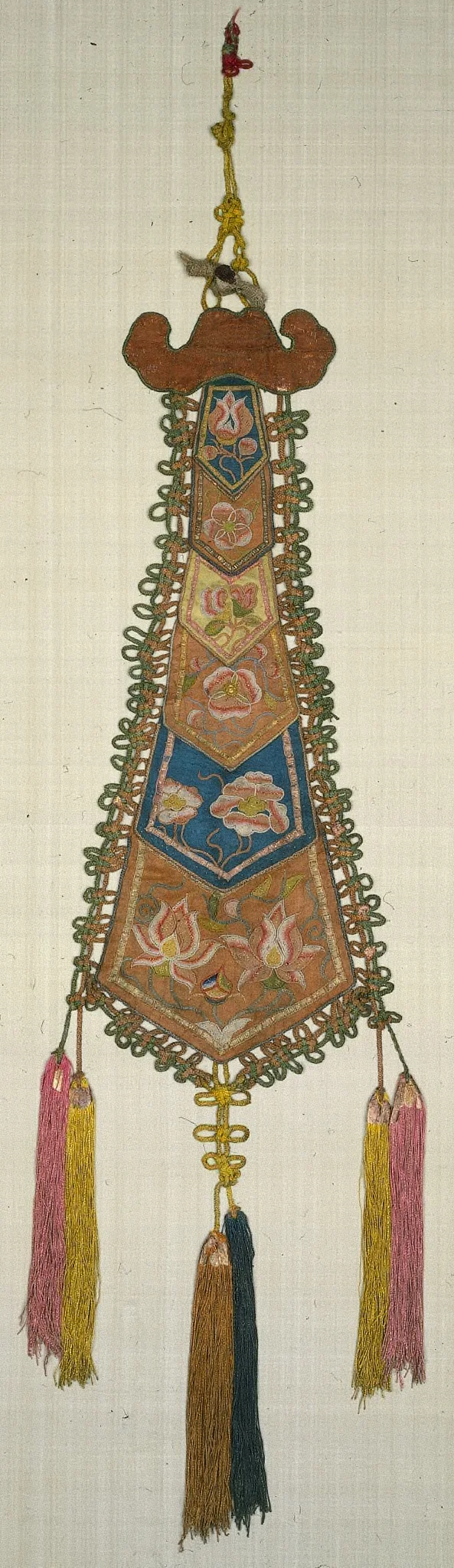
Pendant
Cleveland Museum of Art Object Description Pendants were used extensively in Buddhist settings where they were attached to almost anything needing decoration: ritual objects, canopies, valances, pillars, and other architectural components. They could be made in a variety of ways. This example consists of a heading and six tiers, each embroidered separately and then attached, one to the next. The earliest known pendant of this type was found in Central Asia and dates from the Tang dynasty (AD 618-907). The 14th-century date of this pendant is indicated by the style of the flowers.
Jewish Women Under the Orientalist Gaze
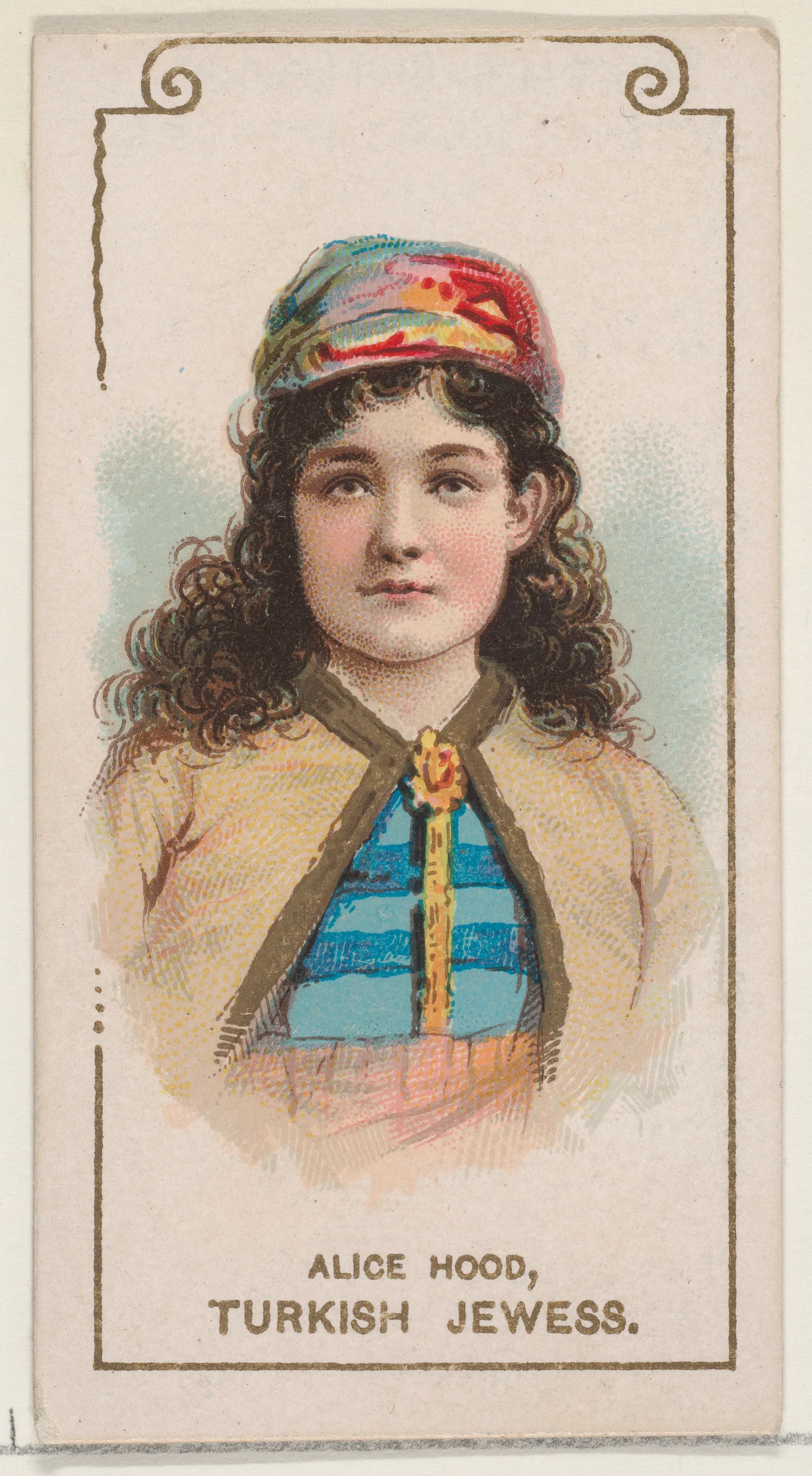
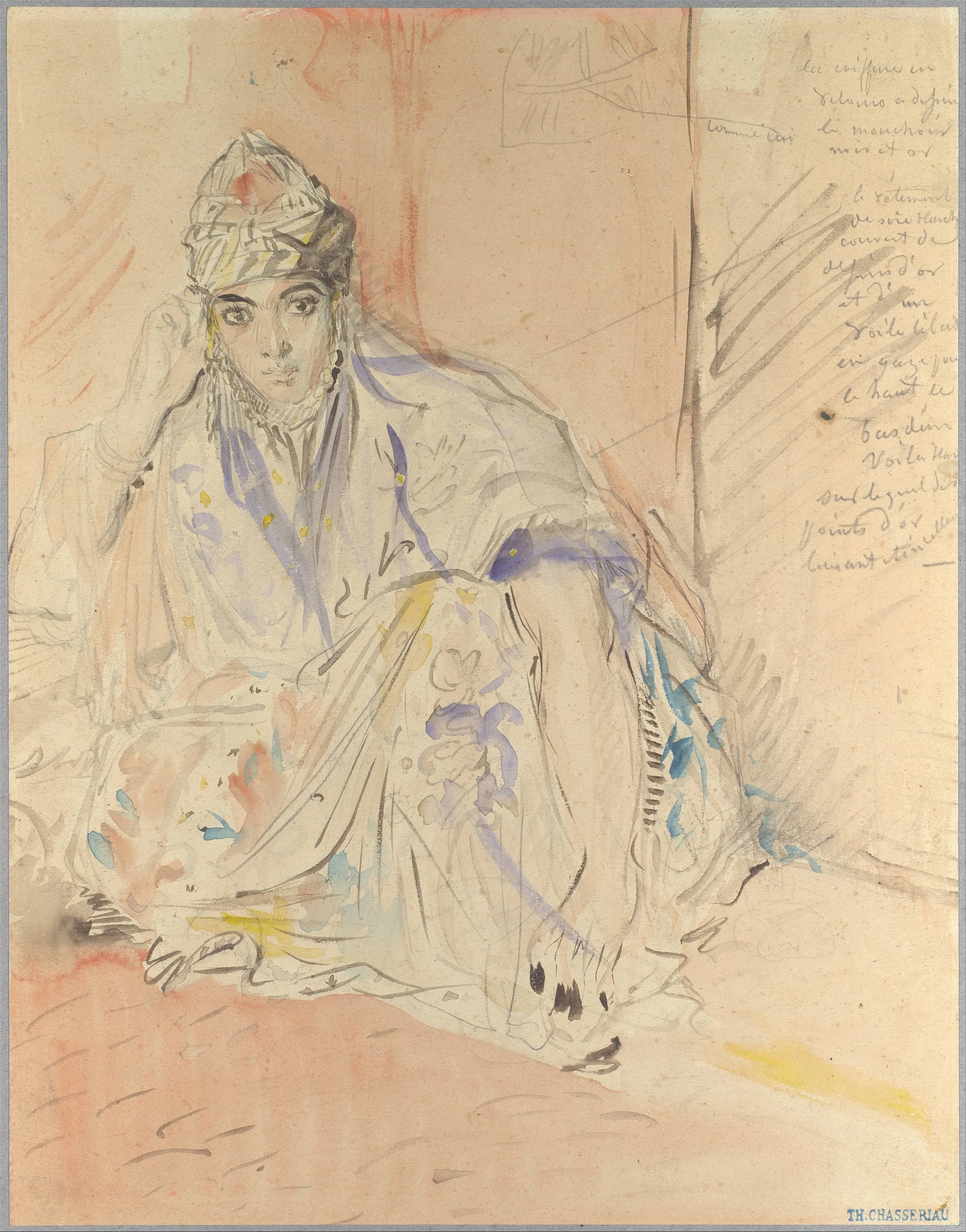
Protection from the Evil Eye
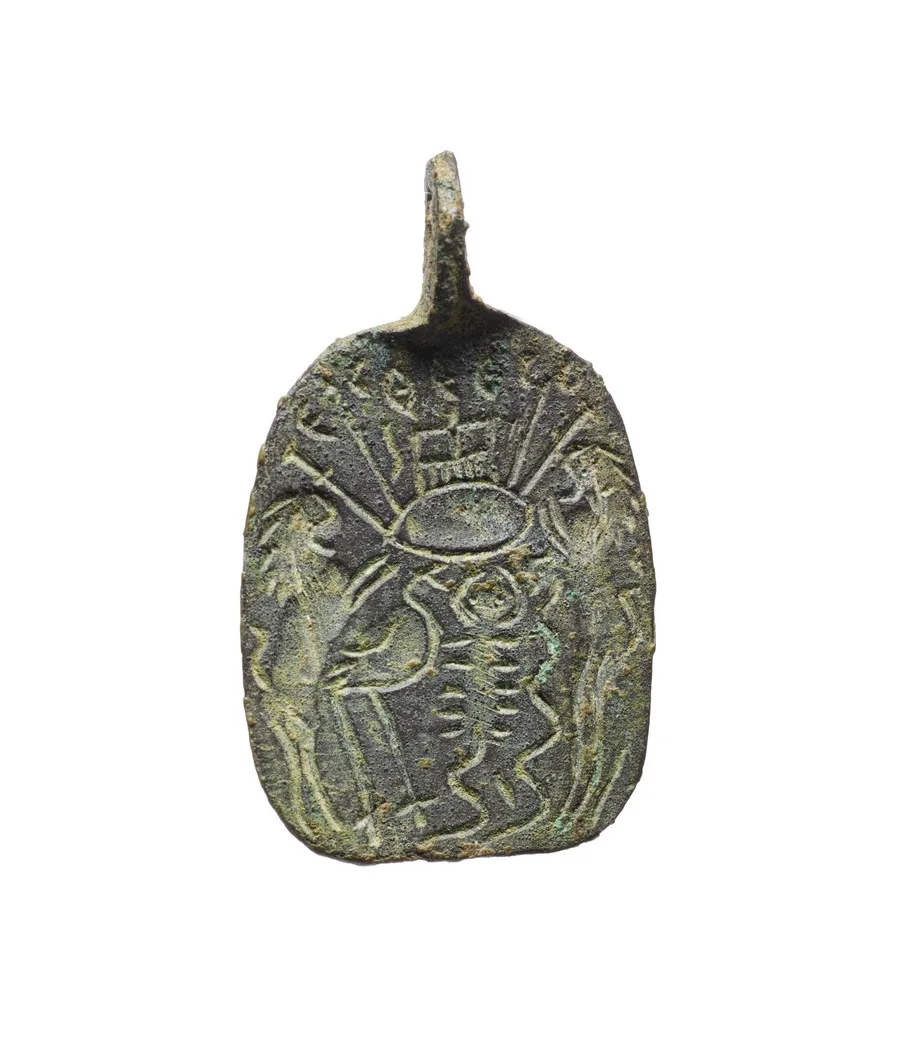
Amuletic Pendant
Walters Art Museum Object Description On this side of the pendant is an eye, attacked by a lion, snake, scorpion, stork, and spears. According to the Testament of Solomon, a magical text dating to before the 3rd century AD. The image of the "much suffering eye" protected the wearer from the Evil Eye, which could do harm by its very glance. On the other side, Solomon, the Holy Rider, spears Lillith, the embodiment of evil.For the latest information about this object, Amuletic Pendant, visit the Online Collection of the Walters Art Museum.
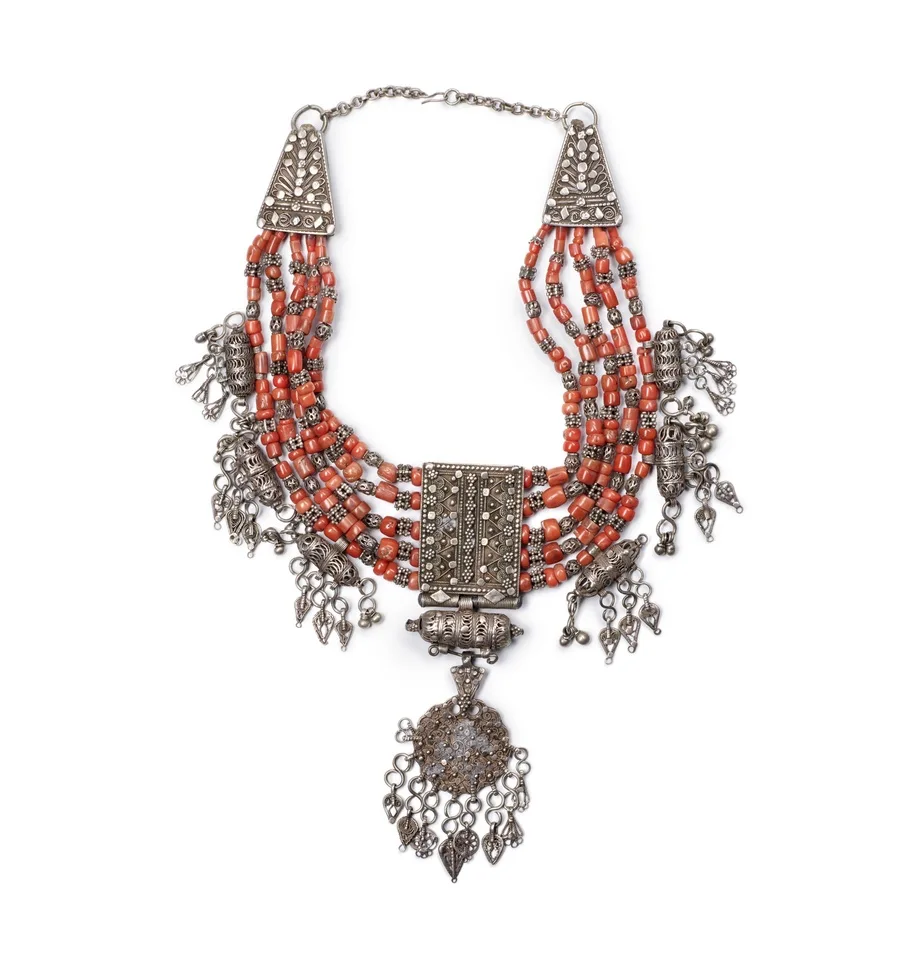
Necklace with Coral Beads
Walters Art Museum Object Description Silver jewelry was an important part of tribal culture in Yemen, as it constituted a family’s wealth, which could be worn (typically by women) and thus transported with their nomadic or seasonal movements. Both Jewish and Muslim women in Yemen wore elaborate silver jewelry, especially for weddings and on other festive occasions. Many elements of Yemeni jewelry had talismanic functions, meaning they possessed the spiritual power of protection and blessing (baraka). The noise made by bells and dangles, served to protect the wearer from the ills brought on by the malevolent glare of the evil eye. Some Yemeni jewelry like this necklace features beads made of coral or other red materials. The color red was understood to promote good health for women, especially during childbirth. For this reason, expectant mothers were often gifted a necklace with coral beads for their first child. The skilled artists who created this type of jewelry were primarily Jews, many of whom signed their work. This regional tradition of silver jewelry flourished at the end of the 19th century and lasted until the mid-20th century, at which point Jews were expelled from Yemen.For the latest information about this object, Necklace with Coral Beads, visit the Online Collection of the Walters Art Museum.
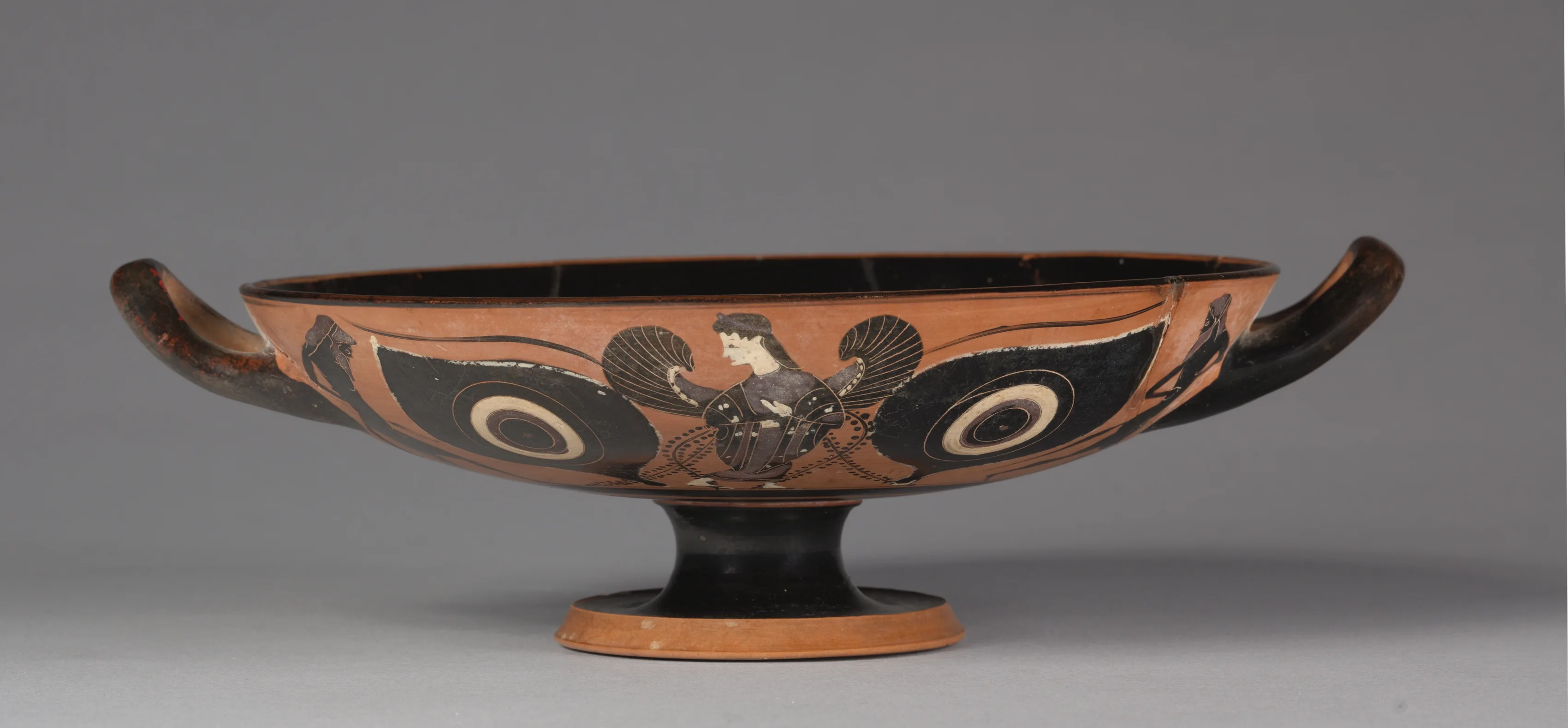
Black-Figure Eye Cup: Iris and Satyrs (A, B); Gorgoneion (I)
Cleveland Museum of Art Object Description Along with two large sets of eyes on its exterior, this drinking vessel also features other figures: a winged female, probably Iris, between each pair of eyes, and pairs of satyrs flanking them; a winged dolphin beneath each handle; and a frontal Gorgoneion, or face of Medusa, baring her teeth and tongue within the tondo. Although the eyes and Gorgoneion may serve to ward off evil, they also make for fluid identities while drinking, inviting drinkers to enter the mythical realm. For when tilting such cups to imbibe, drinkers confront monstrous beings while simultaneously masking their faces from others.
Tools for Foretelling the Future
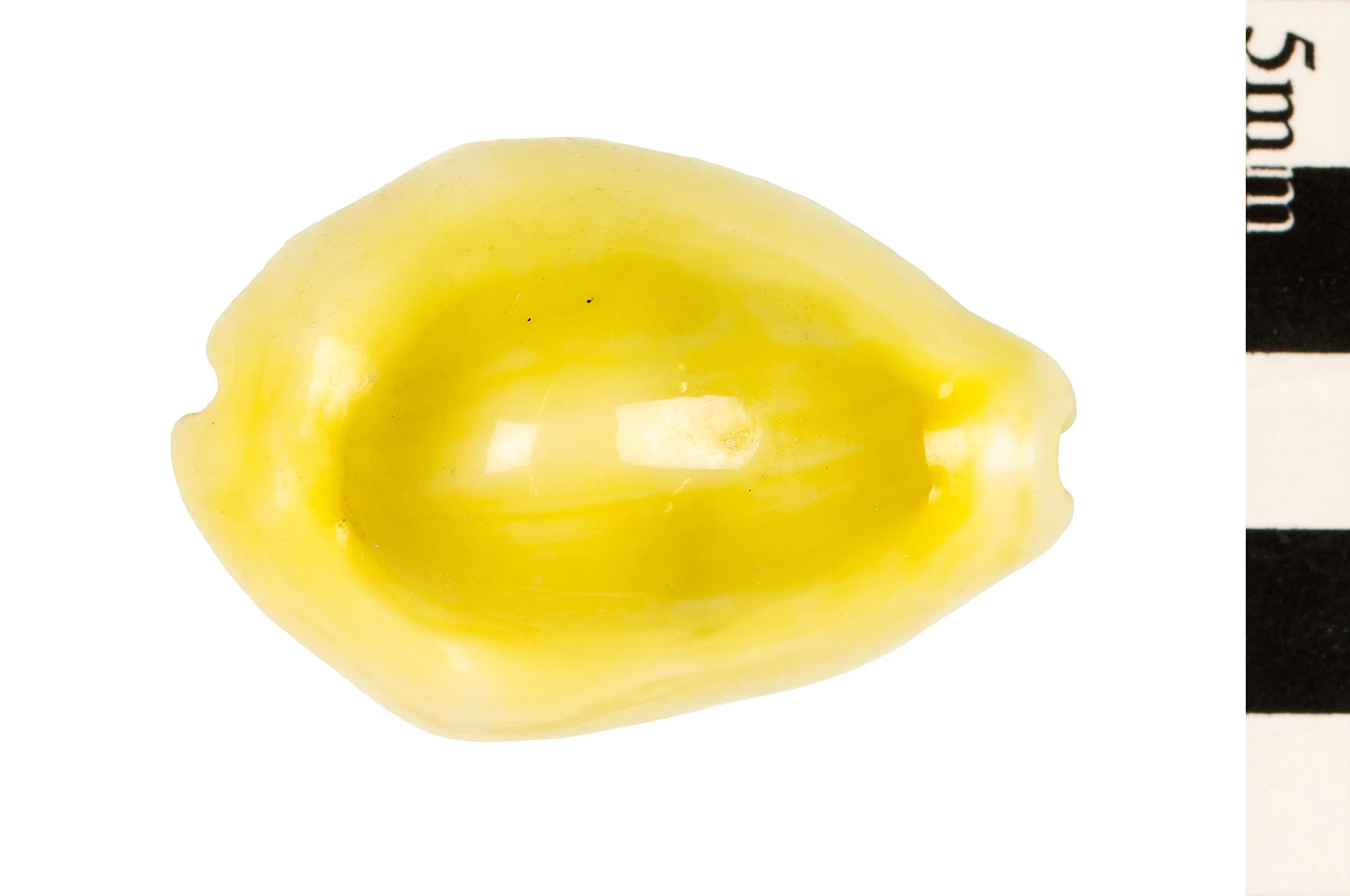
Money Cowrie, Money Cowrie
National Museum of Natural History Object Description This object is part of the Education and Outreach collection, some of which are in the Q?rius science education center and available to see.
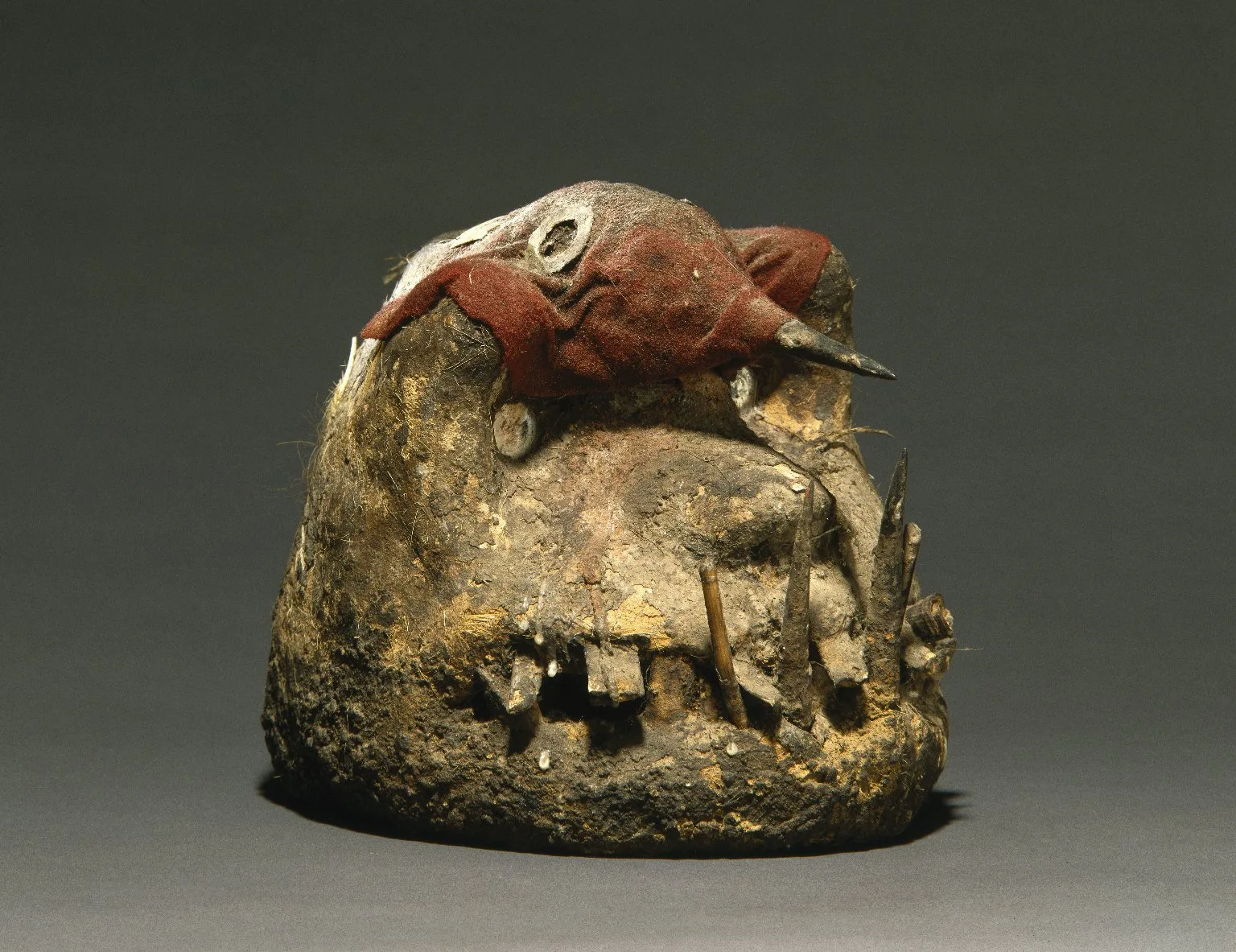
Divination Object (Gle)
Brooklyn Museum Object Description Head shaped form with deeply recessed eye sockets in which are set pieces of mirror. Eyebrow ridges protrude as does the forehead. The forehead is covered with red cloth and has a duiker horn protruding from it. Two metal rings attached to the red cloth give the forehead the appearance of a bird head. The wide mouth with teeth of wood and two additional duiker horns forming tusk-like protrusions. Back of head has four spine like-ridges. Top of head has a depression partially filled with egg shell. Condition: Stable but fragile.
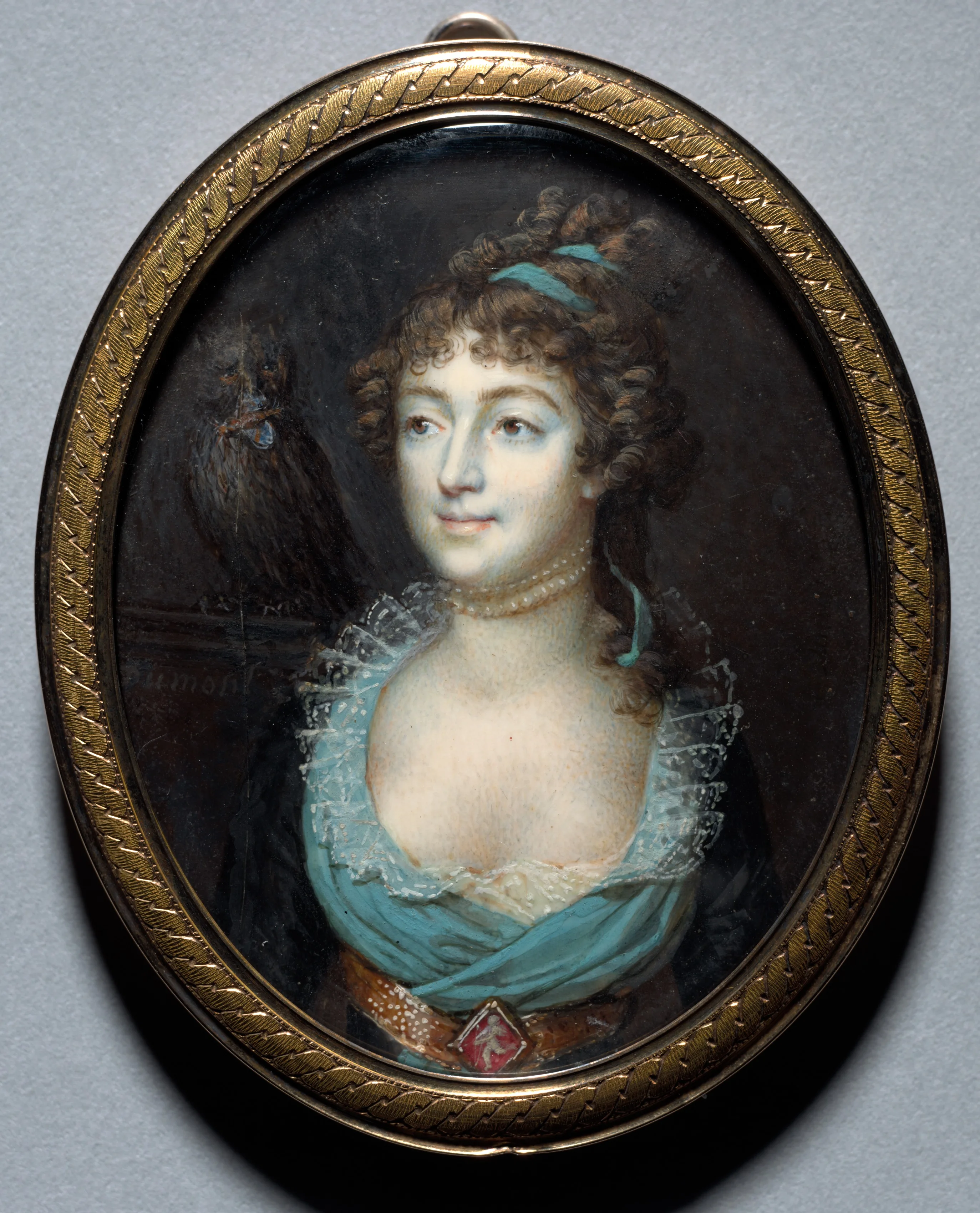
Portrait of Mademoiselle Marie-Anne Adelaide Le Normand
Cleveland Museum of Art Object Description Mademoiselle Marie-Anne Adelaide Le Normand, a famous Parisian fortune teller, was born in Alençon, France, between 1768 and 1772. Little is known of her early years, but by 1790 she had already established a strong following in Paris. Fortune telling was a highly lucrative field perhaps due to the extreme political unrest that permeated Paris in the 1790s. Although the practice of fortune telling was illegal at the time, people from the highest social classes sought Le Normand's services. She prophesied the bloody deaths of the French revolutionaries Maximilien Robespierre, Louis Antoine de Saint-Just, and Jean-Paul Marat when they visited her salon. Additionally, Alexandre Dumas was one of many to describe Le Normand's prediction of the monumental rise and fall of both Napoleon and his wife Josephine, who visited Le Normand's studio frequently. The fortune teller managed to retain her popularity through the Napoleonic era and the reign of King Charles X before retiring from Parisian life after correctly foretelling the outcome of the July Revolution in 1830. She moved back to Alençon and continued writing books of predictions until her death in 1843. Her greatest tangible legacy is a set of tarot cards known as the Blue Owl deck or Le Grand Jeu de Mlle. Le Normand. Grimaud, a self-proclaimed pupil of Le Normand, published the deck two years after her death. The accounts of Le Normand's physical appearance and her studio are almost as colorful as her predictions, and perhaps equally disputable. A description published in the late 1850s reported how "some thirty or forty volumes were arranged on the shelf against the wall, chiefly consisting of the works of the lady herself . . . Mademoiselle soon made her appearance-a short, fat little woman, with a ruddy face, overshadowed by the abundant curls of a flaxen wig, and surmounted by a semi-oriental turban, the rest of her attire being much in the style of a butter woman." Captain Rees Howell Gronow visited Le Normand between 1814 and 1830 and published his account in a book of recollections in 1865: "It was impossible for imagination to conceive a more hideous being. She looked like a monstrous toad, bloated and venomous. She had one walleye, but the other was a piercer. She wore a fur cap upon her head, from beneath which she glared out upon her horrified visitors. The walls of the room were covered with huge bats, nailed by their wings to the ceiling, stuffed owls, cabalistic signs, skeletons-in short, everything that was likely to impress a weak or superstitious mind." In "The Court of Napoleon," Frank Boot Goodrich noted that Le Normand's studio featured miniature portraits of the various rulers she patronized as well as a miniature of herself painted by Jean-Baptiste Isabey, court painter to Napoleon. The Cleveland Museum of Art's miniature does not reflect Le Normand's mythically monstrous appearance. She was in her early twenties when this miniature was painted. Perhaps the fortune teller chose François Dumont as the artist because he had recently produced several portraits of Marie-Antoinette, whom Le Normand admired greatly. Her dress and hairstyle here are reminiscent of the queen's in Dumont's 1792 portrait of her. A student of Jean Girardet, Dumont was one of the most exclusive French miniature painters of the late 18th and early 19th centuries and rendered many of the elite subjects of Le Normand's predictions; even if Dumont himself found no use for the prophetess's services, they certainly relied on similar clientele for their prosperity. The artist's inclusion of an owl eating a moth makes the CMA's miniature unusual. The owl often represents wisdom and was the companion of the ancient Greek goddess Athena. The ancient Romans were among many cultures to associate the nocturnal owl with the ability to predict death; even William Shakespeare called the bird of prey a "fatal bellman" in his play "Macbeth". These darker aspects of the owl make it an appropriate companion for Le Normand, who foretold the deaths of so many. Ashley Bartman (May 2014)