
Tools for Foretelling the Future
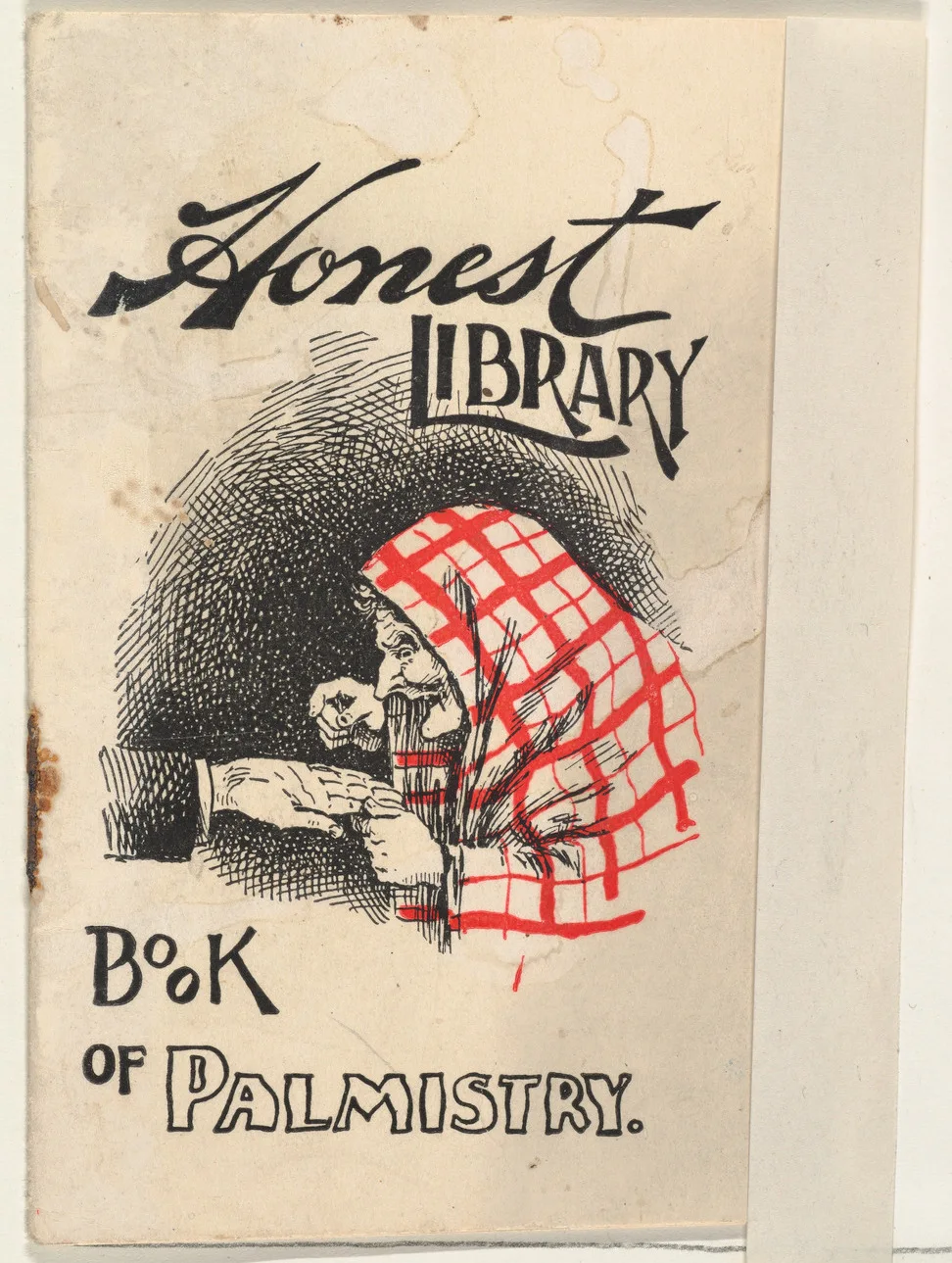
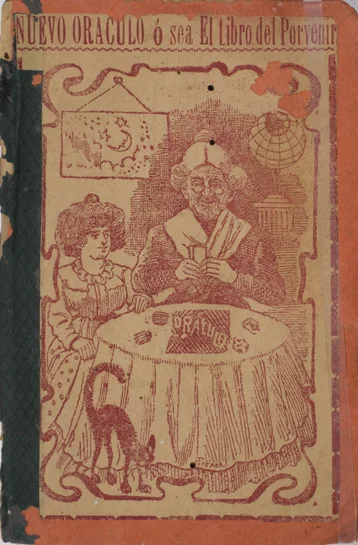
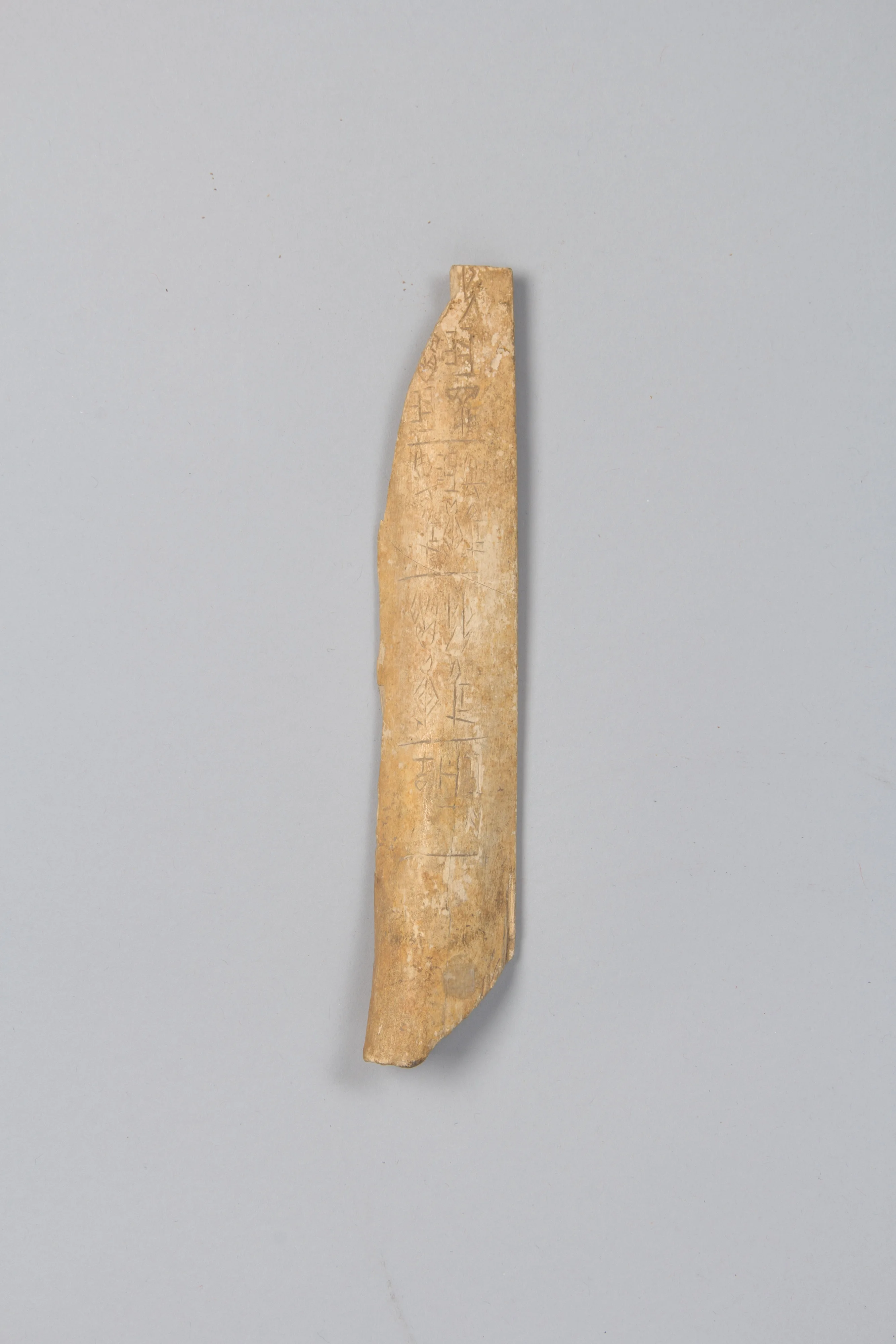
Modern-day fascinations with various forms of fortune telling have been attributed to trendiness and online influencer culture, where traditions and rituals for divination are shared both freely and for profit with thousands of internet strangers. However, there’s perhaps nothing less trendy or new. Nearly every civilization across the centuries and around the globe has asked: What really happened? What comes next? What is the truth? The tools for fortune telling, soothsaying, and divination found in this collection date back to the 2nd millennium BCE, when answers to querents’ questions were sought from celestial bodies, oracle bones, and scrying, the practice of gazing into reflective surfaces. From there, these works move through time and space, telling a story of humans seeking answers from the unknown. Here you’ll find tools of great sacred and societal importance, including ceremonial tools from African cultures dating back centuries, a holy divination book from the Safavid period in Iran, and ancient astrological systems from India in the 1700s. You’ll also discover objects used for entertainment and socializing: fortune telling parlor games played in 18th century Europe, an American palmistry guide published as a promotional novelty in the late 1800s, and a popular Mexican fortune telling guide, Nuevo Oraculo or sea el Libro del Provenir (The New Oracle or the Book of the Future), published in 1910. Some of these tools are used literally for telling the future. Some are used for diagnosing and treating diseases. Others are for making decisions or determining guilt or innocence. A few are just plain fun. All, however, speak to the unwaning human desire to know life’s mysteries: our fortunes, our futures, what our existence has in store.
B
C
D
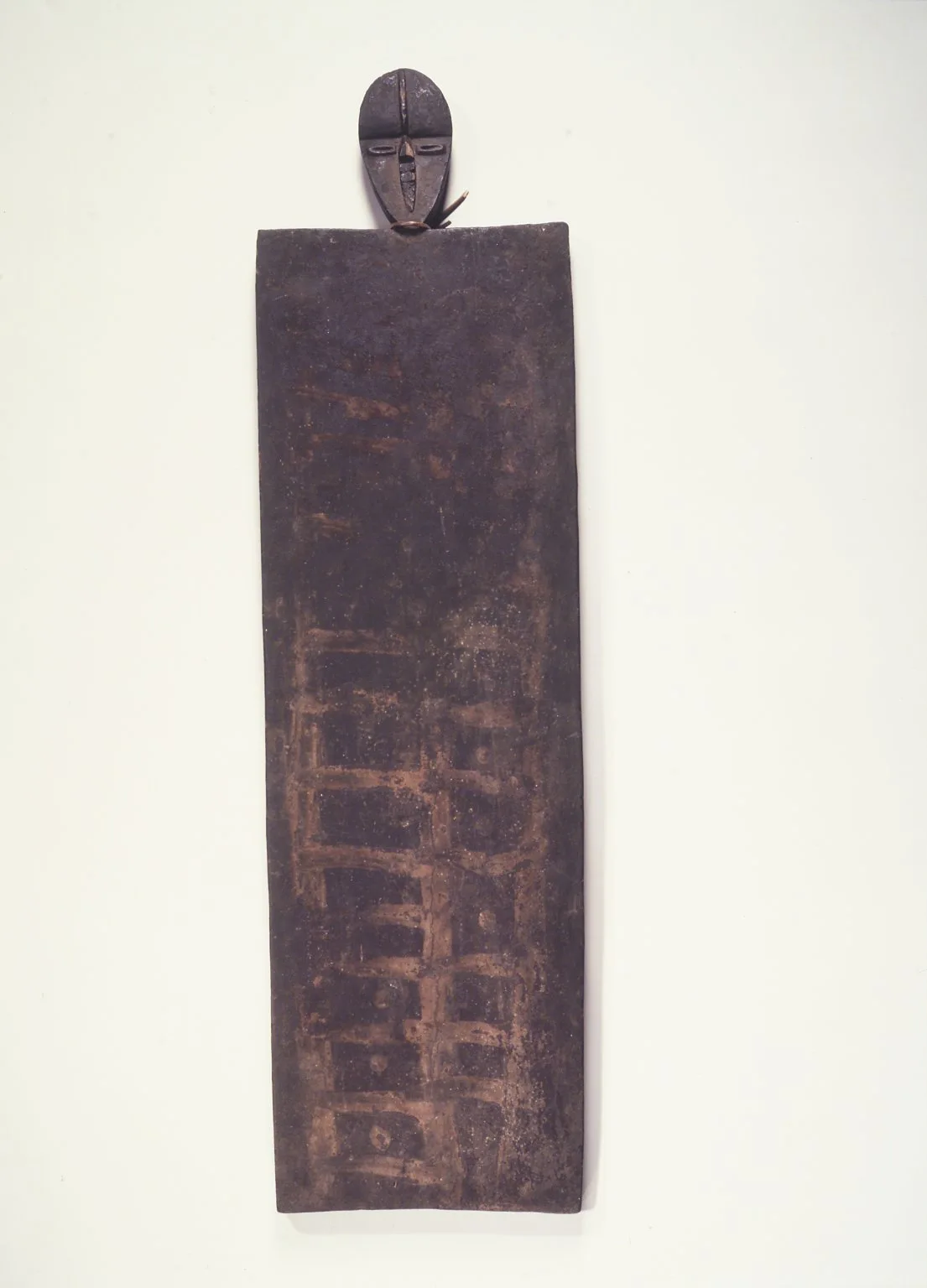
Divination Board
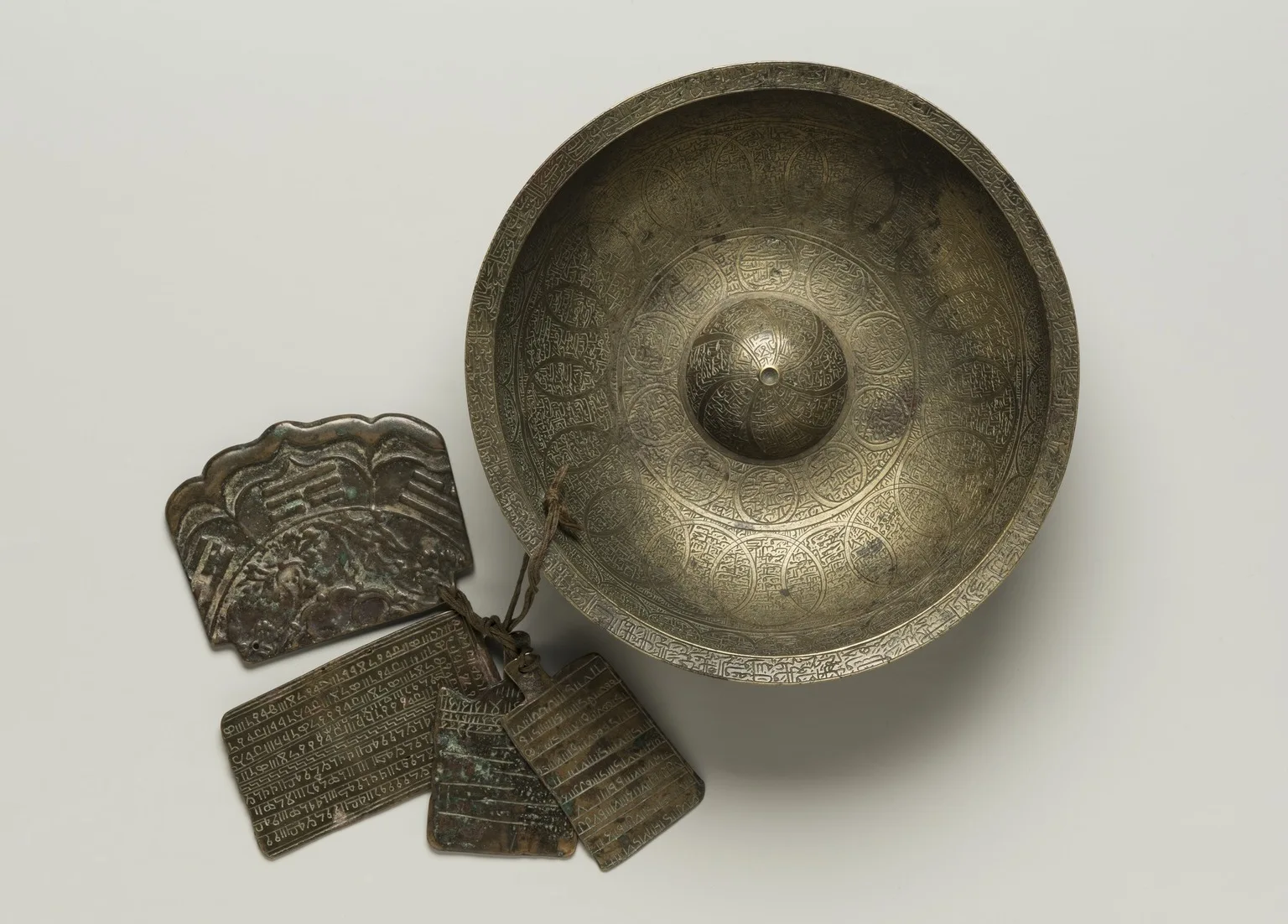
Divination Bowl
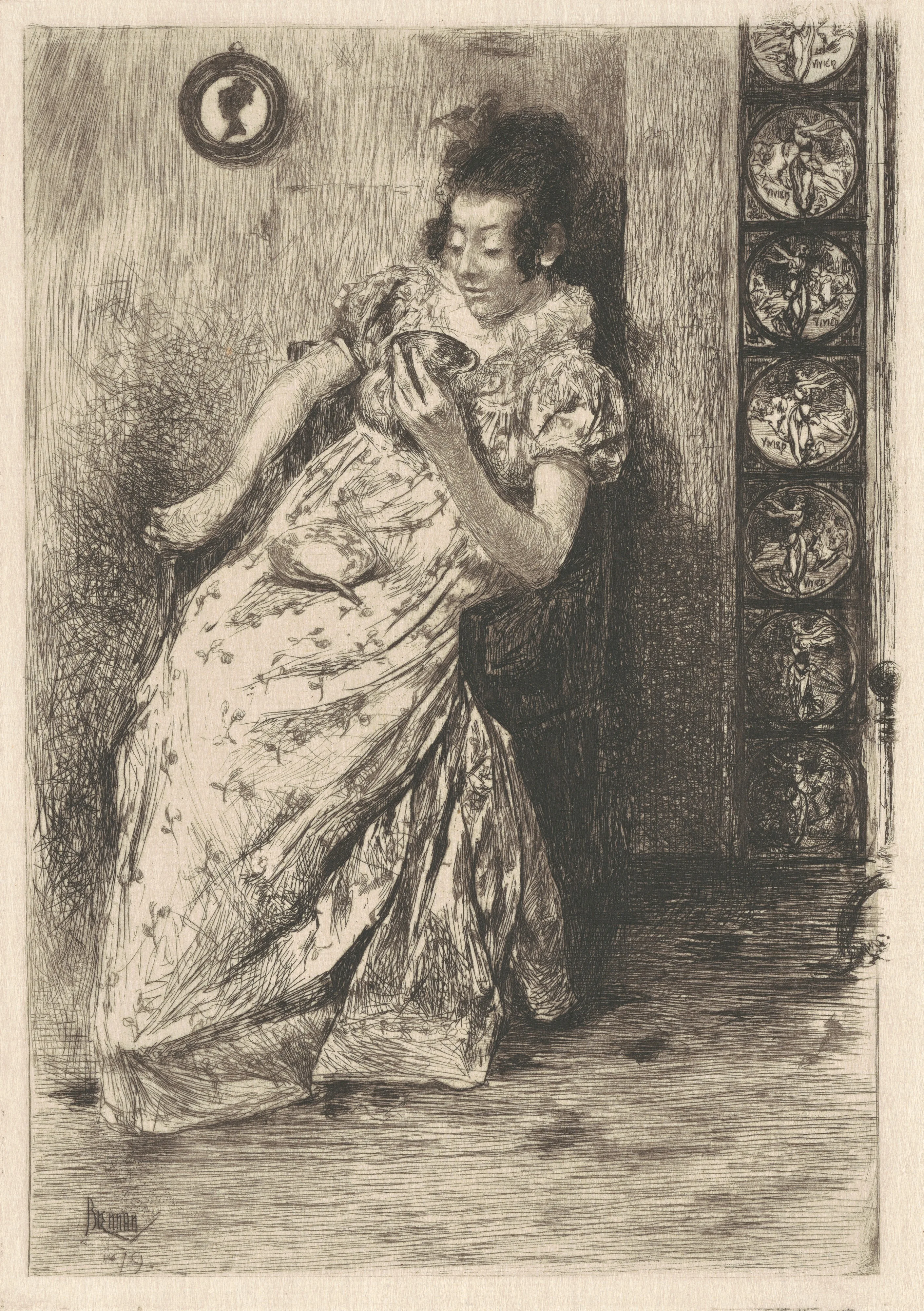
Divination in Tea Leaves
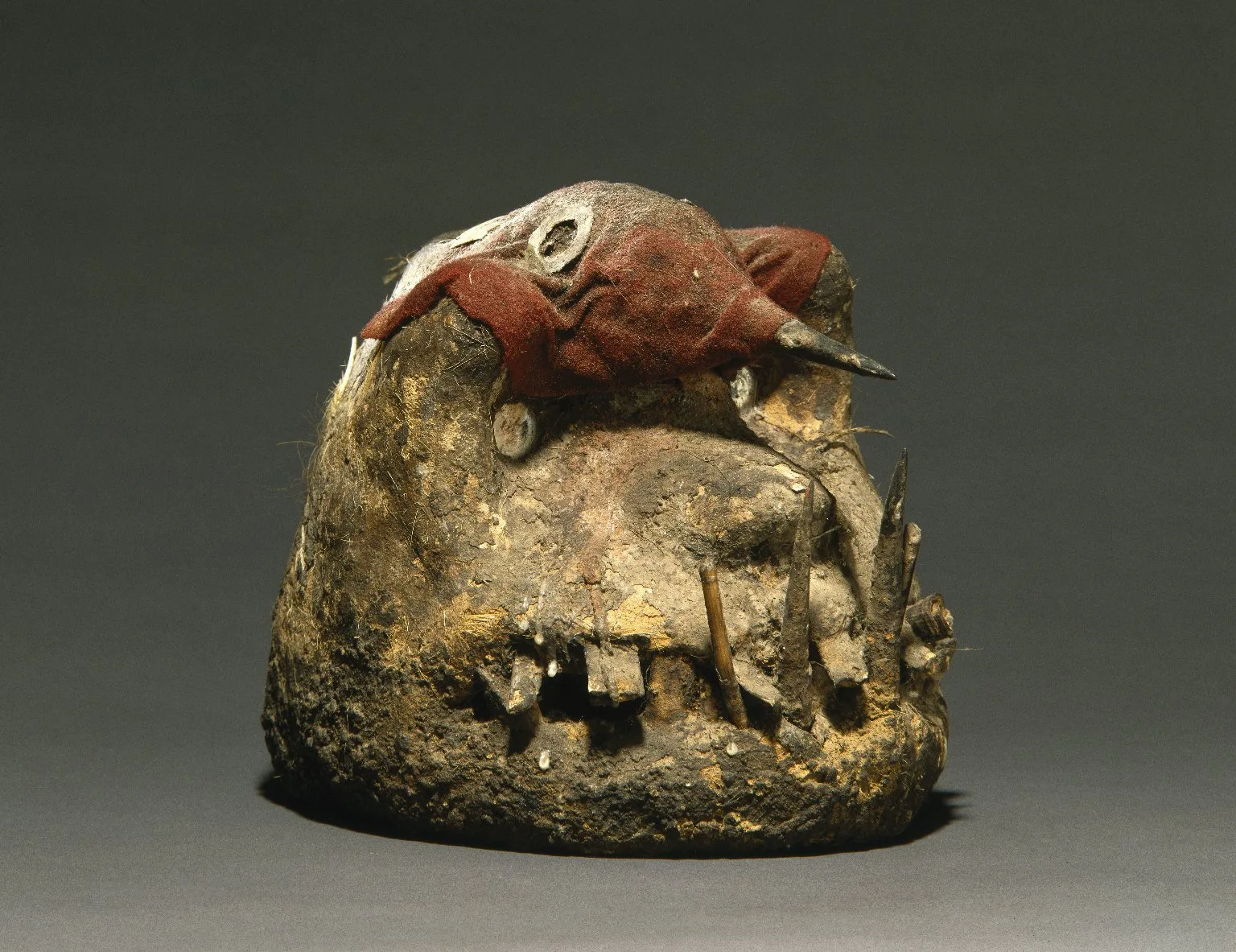
Divination Object (Gle)
Brooklyn Museum Object Description Head shaped form with deeply recessed eye sockets in which are set pieces of mirror. Eyebrow ridges protrude as does the forehead. The forehead is covered with red cloth and has a duiker horn protruding from it. Two metal rings attached to the red cloth give the forehead the appearance of a bird head. The wide mouth with teeth of wood and two additional duiker horns forming tusk-like protrusions. Back of head has four spine like-ridges. Top of head has a depression partially filled with egg shell. Condition: Stable but fragile.
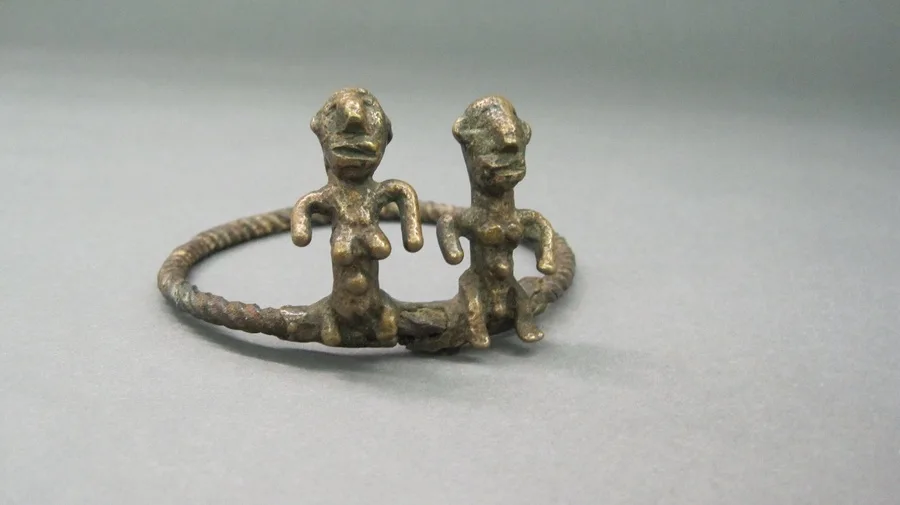
Divination Rings
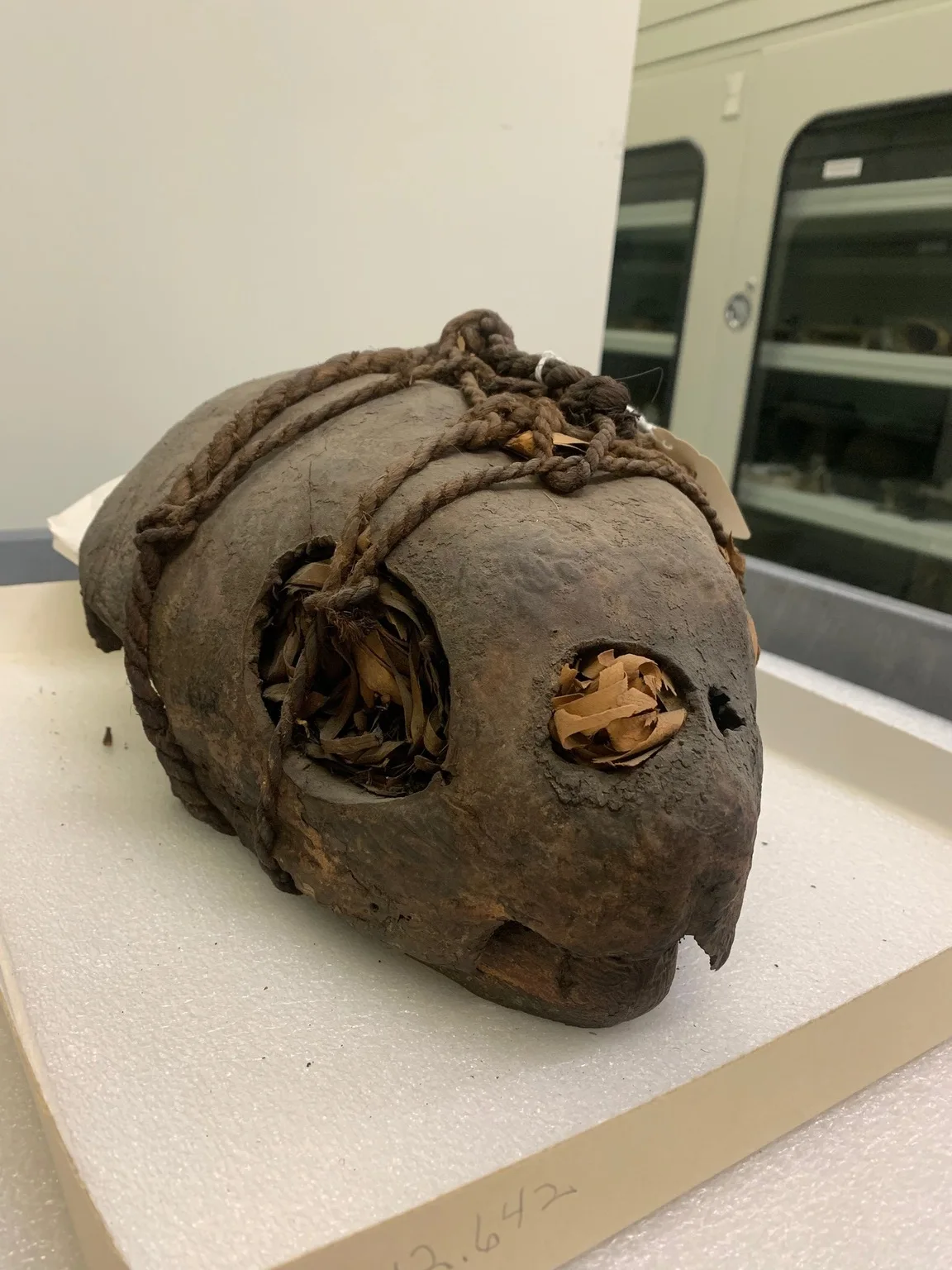
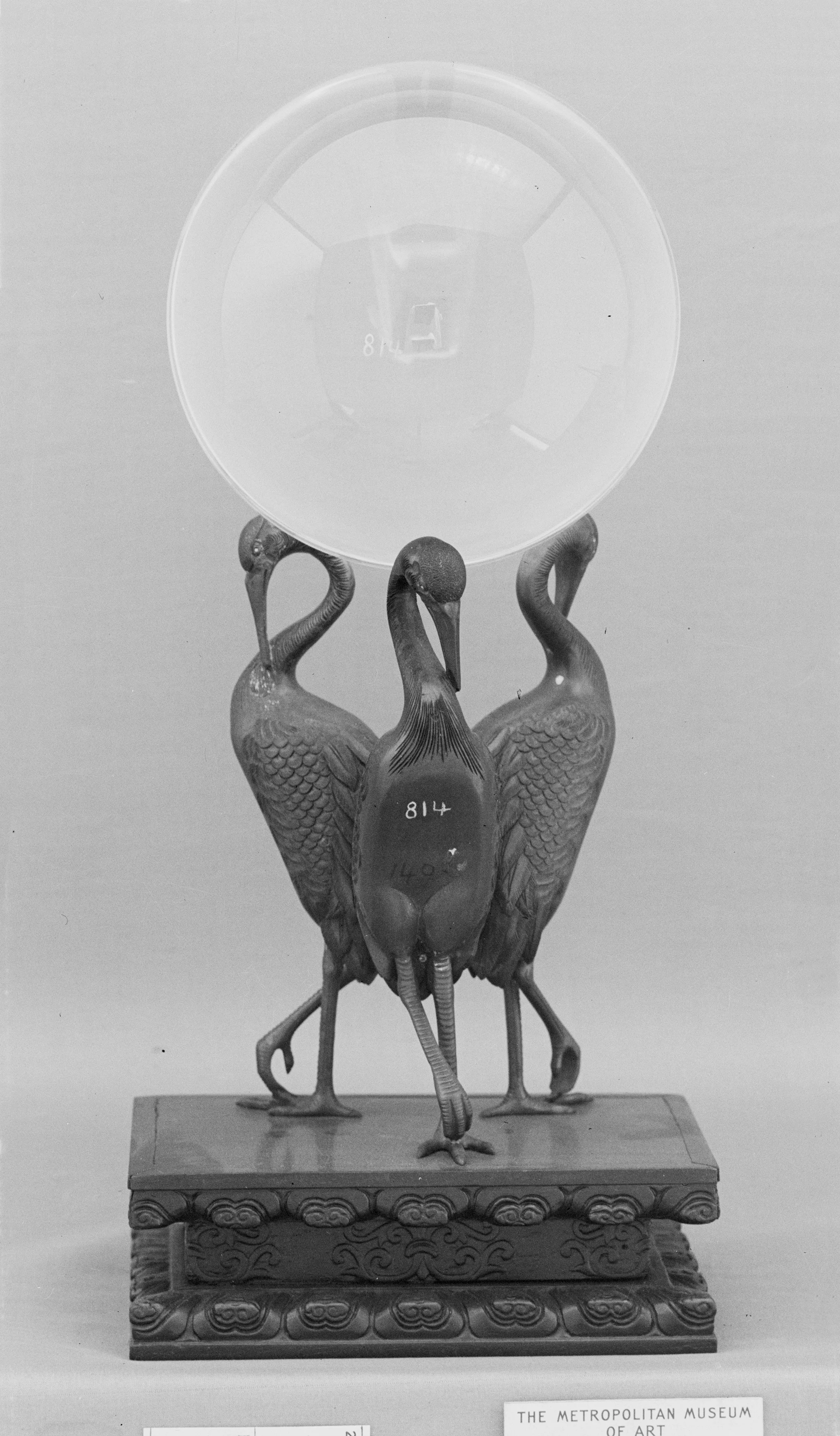
Divination Skull of Loggerhead Turtle
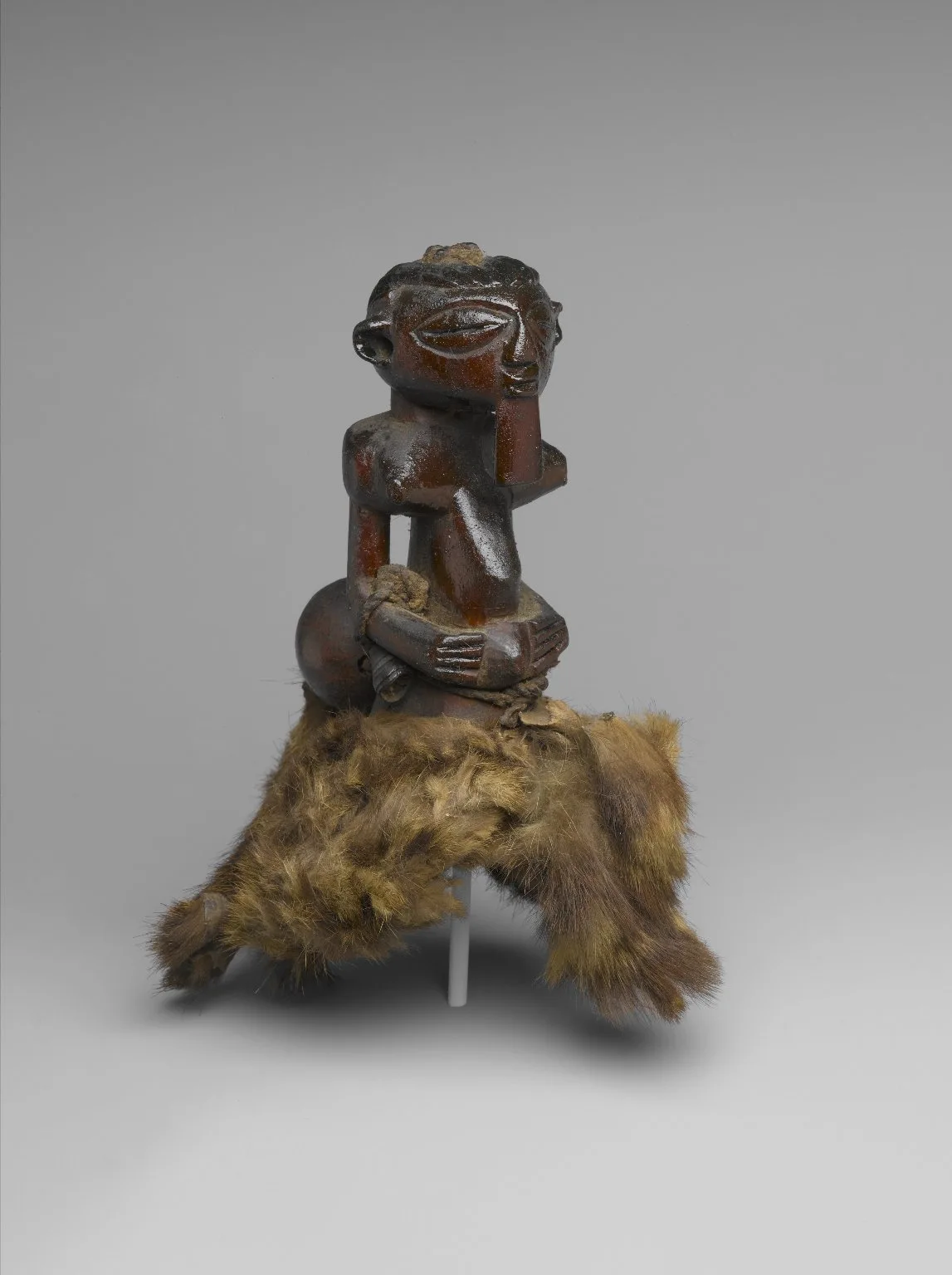
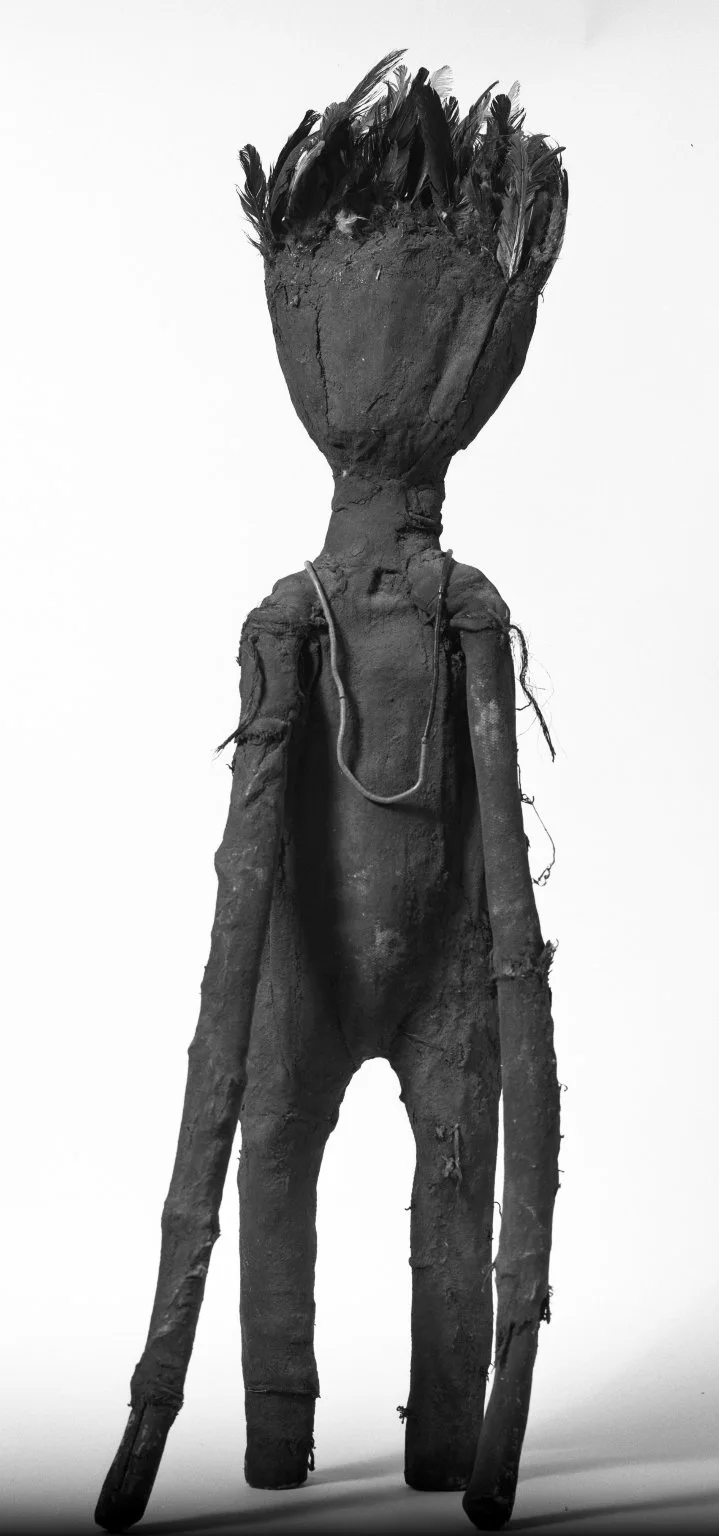
Divination Torso Figure (Nkishi)
Brooklyn Museum Object Description The main portion of the object consists of a carved human effigy. Stylized features of face, beard, hairdo and torso. Earholes have been drilled on both sides of the head. Another hole on top of the head has been filled with unknown material. The p. right arm is wrapped with cordage which runs through a small horn and ties it to the arm. Another length of cord runs around the waist and through a small gourd bound to the back. Below this the object has been wrapped with a piece of hide, most of its fur still intact. It is tied at the back The wood, cord, horn and gourd have been coated with an oil/resin material. Condition: good and stable. The wood shows some cracking; the hide is generally brittle. The surface is dusty overall. Magical specialists called banganga use sculptures such as this male half figure known as a mukishi as devices for protection and divination. A mukishi is infused with magical substances drawn from the wild, which activate the spirit force of the object. This figure derives its power from a small medicinal charge in the cranium, a "skirt" of monkey fur, a tiny horn worn on the right arm as an amulet, and a small gourd filled with magical substances, as well as from its sacrificial coating of palm oil.
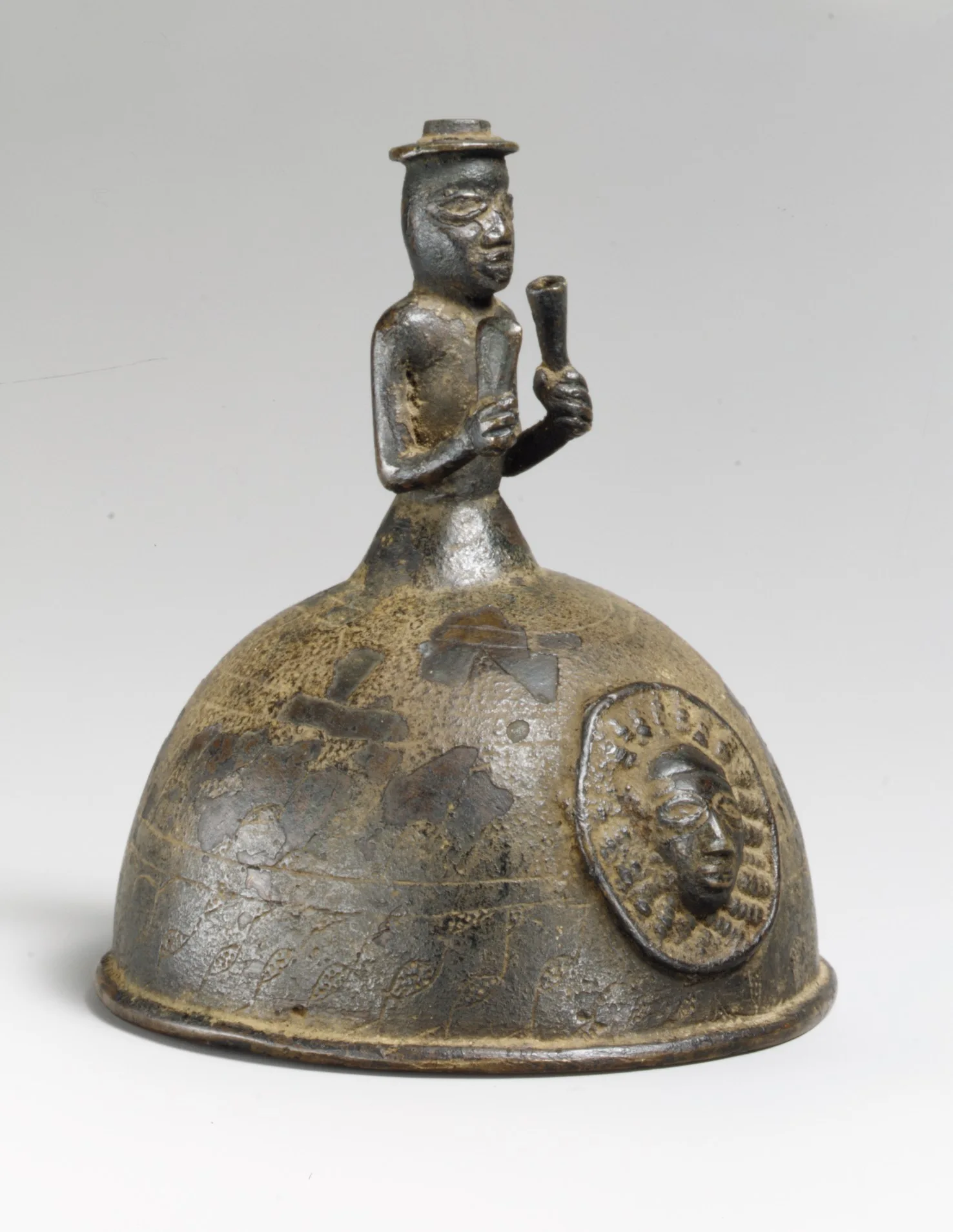
Divination Vessel
E
I
M
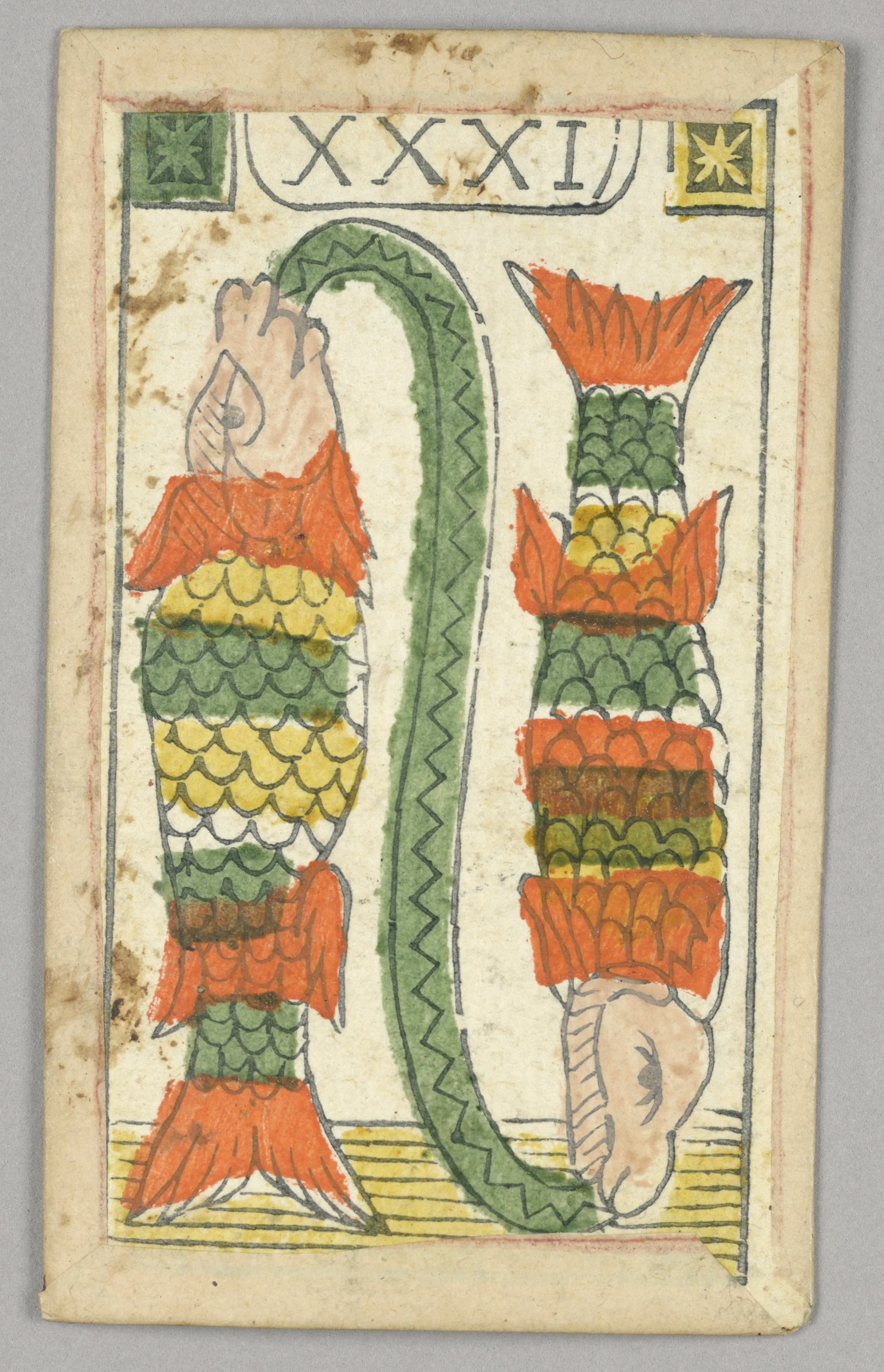
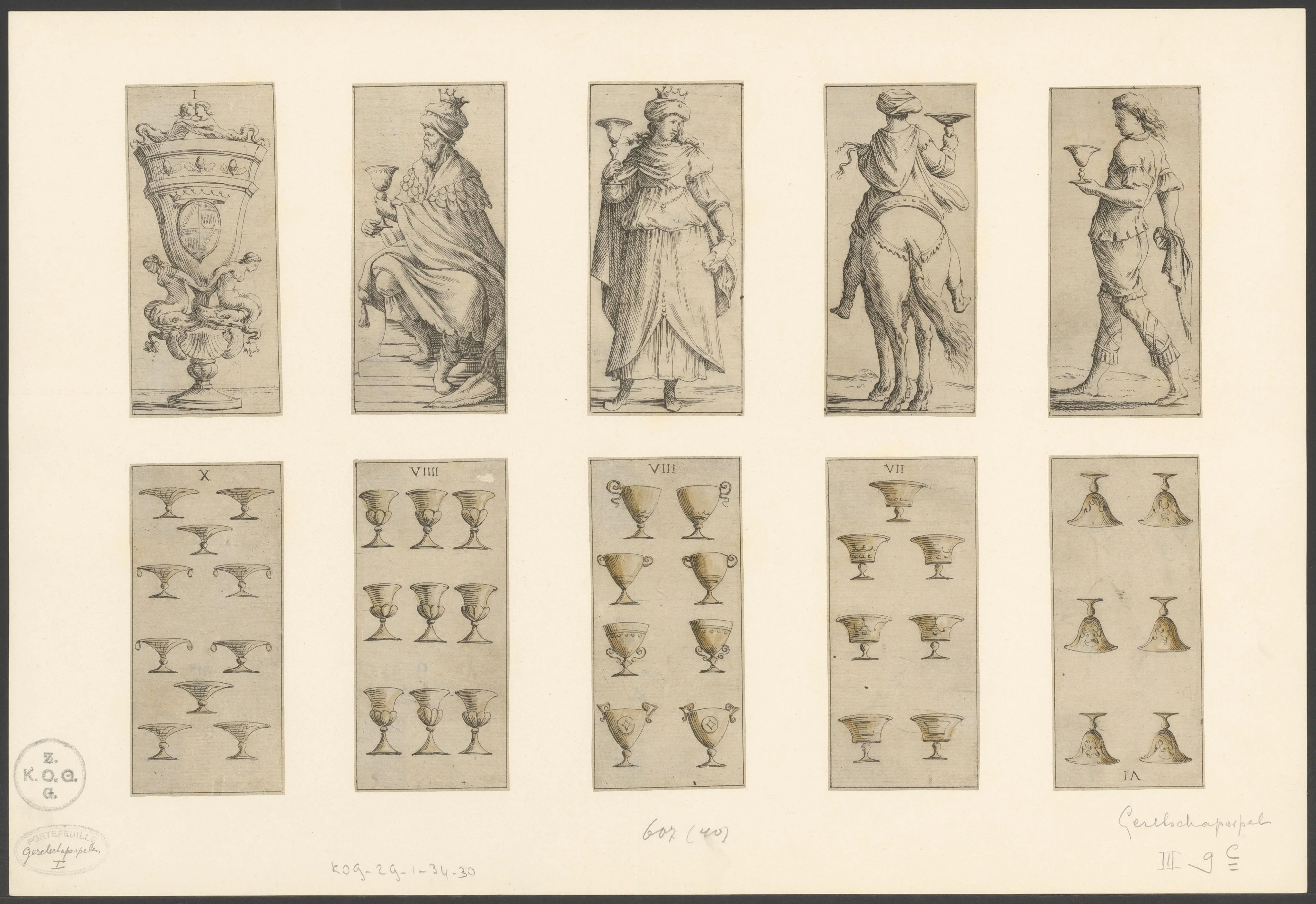
Minchiate (Tarot) Playing Card
Part of a set of Italian Minchiate playing cards.
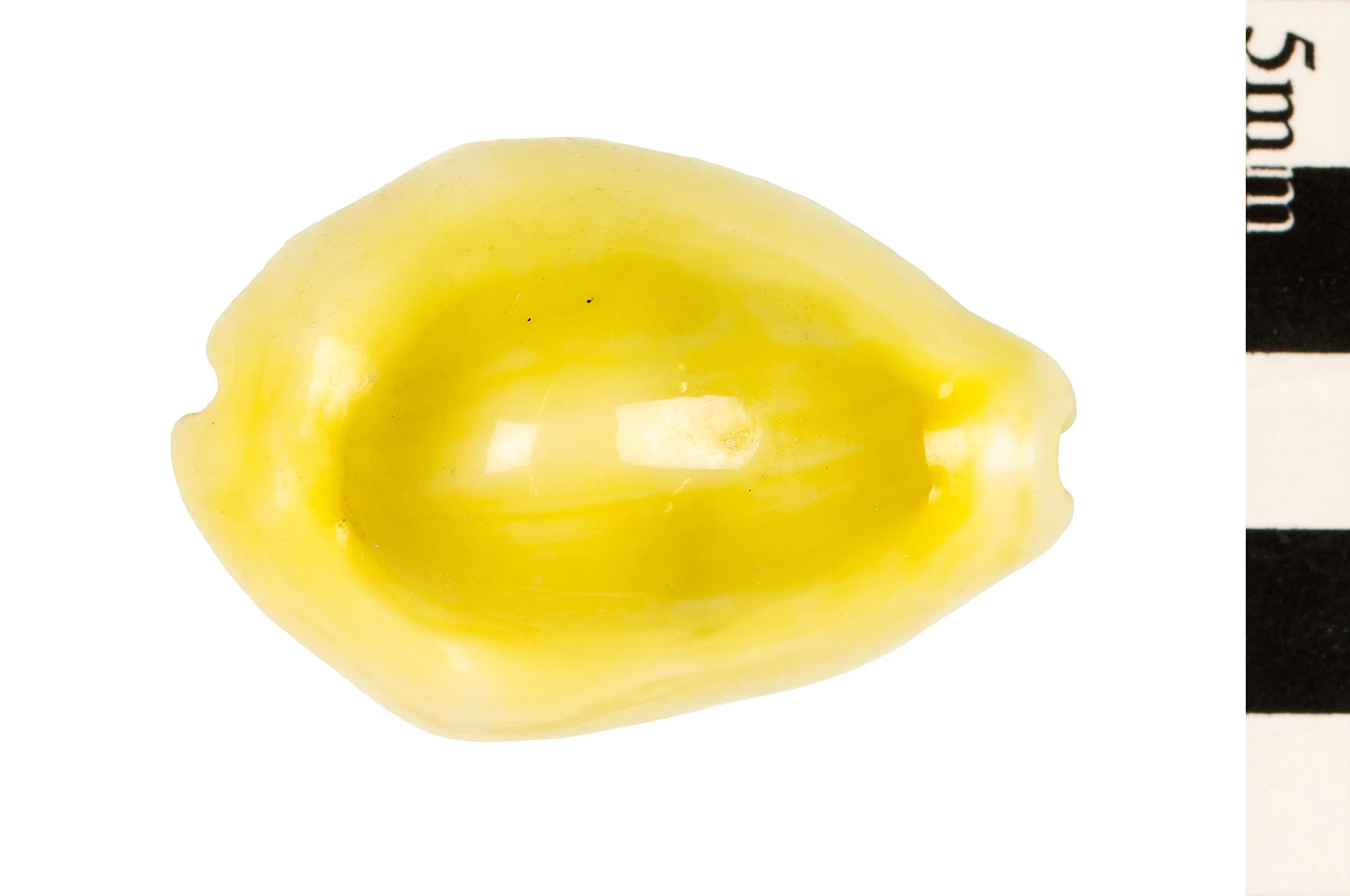
Money Cowrie, Money Cowrie
National Museum of Natural History Object Description This object is part of the Education and Outreach collection, some of which are in the Q?rius science education center and available to see.
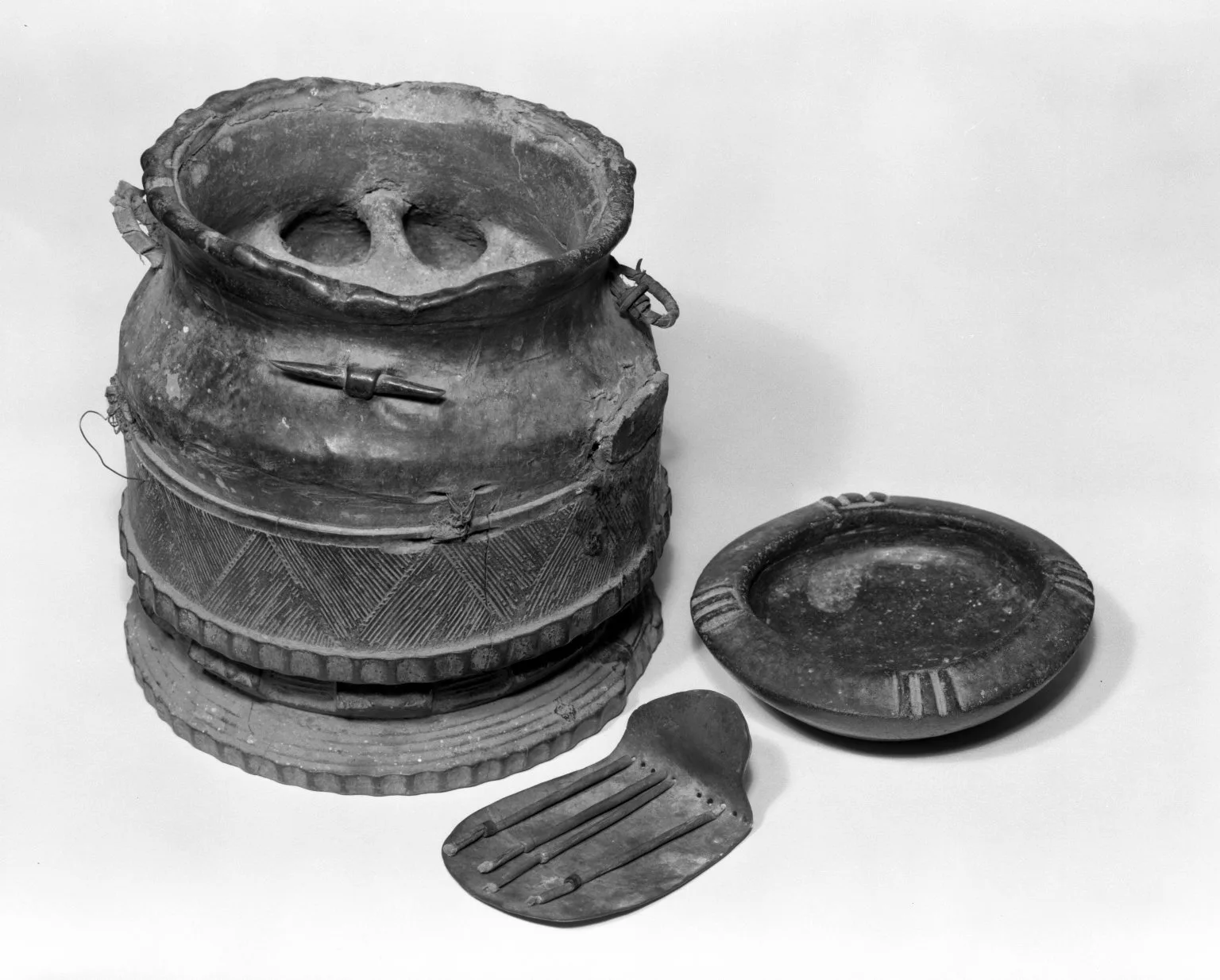
Mouse Oracle
N
O
P
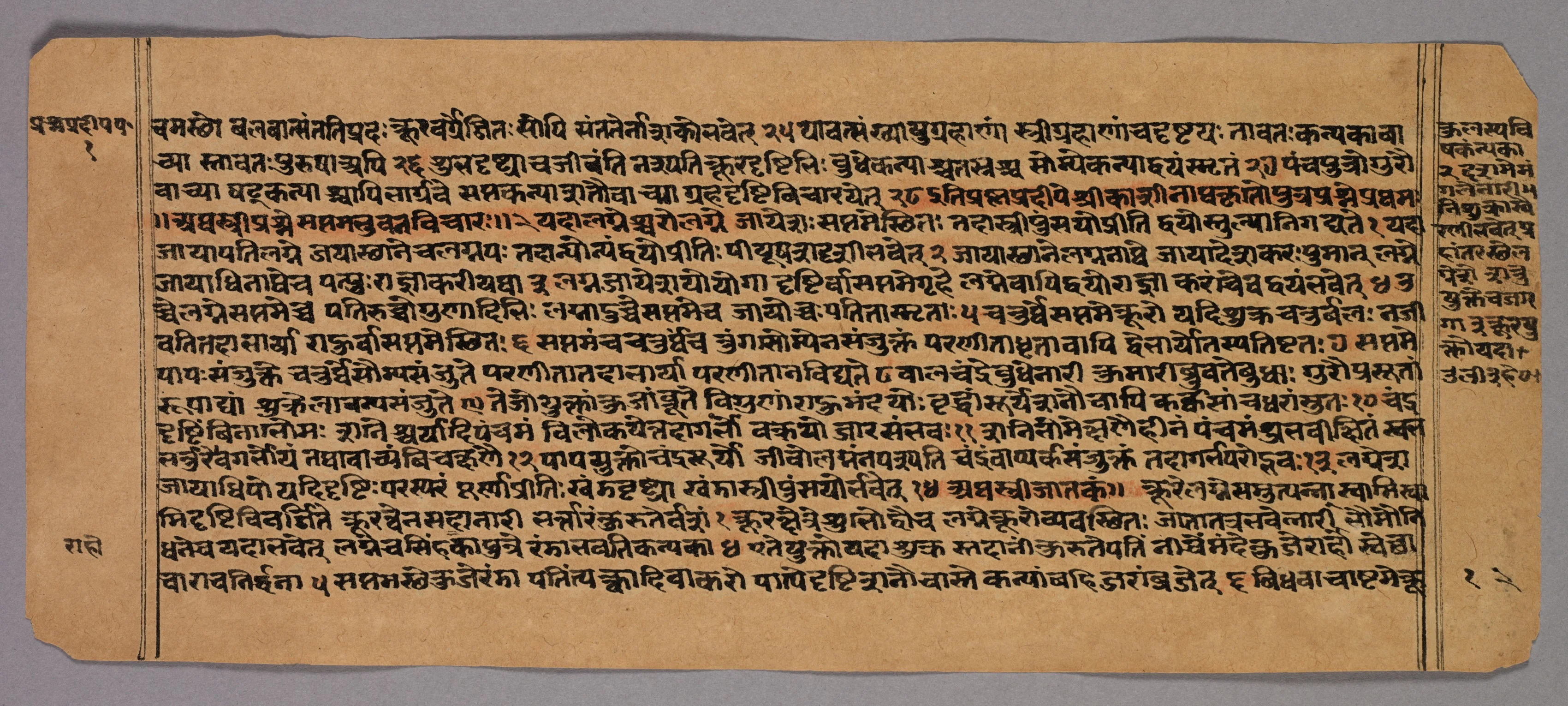
Page from the Prasnapradipa, a Hindu Astrology Text
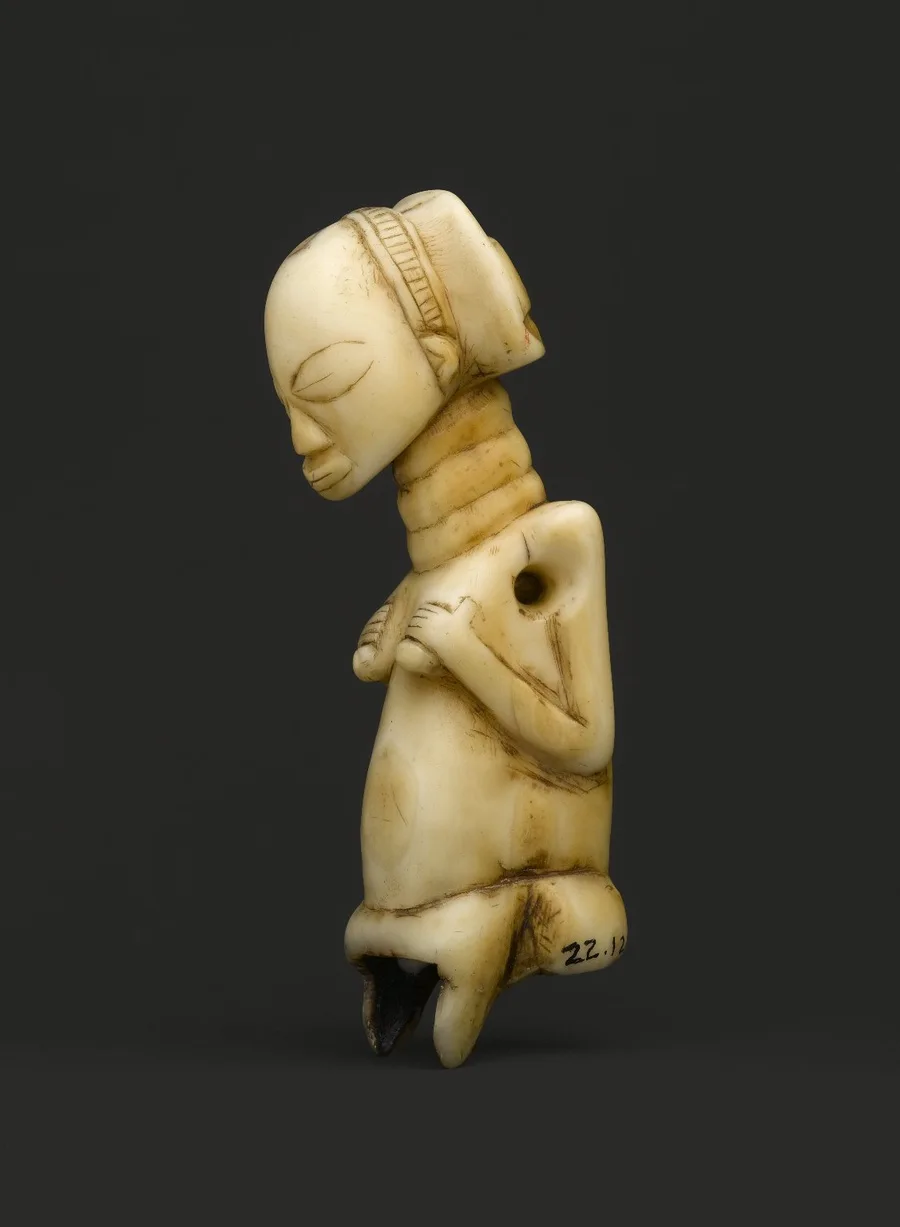
Pendant
Brooklyn Museum Object Description Pendant with slightly curved torso, carved in the round from a hippopotamus tooth. Face is oval-shaped; eyes, oval and closed; and nose, triangular. From back, headdress is flat with large cross carved in relief. Neck composed of three stacked folds or rings. Arms are close to body; hands hold breasts. Two curved projections extend from bottom of figure on each side. Wooden core is inserted in hollowed-out bottom of figure. Slight discoloration in center of torso; small check on top of head. Below neck area a hole pierces entire object for suspension. These pendants carved from hippopotamus teeth were strung on cords with beads and amulets. The gesture of the hands on the breasts signifies divination, respect, and the containment of royal secrets. The pendants are portraits, or at least likenesses, of certain revered ancestors, who are named and honored. Devotees have rubbed the figures with oil in homage to these ancestors, creating a smooth, rich color and lustrous surface.
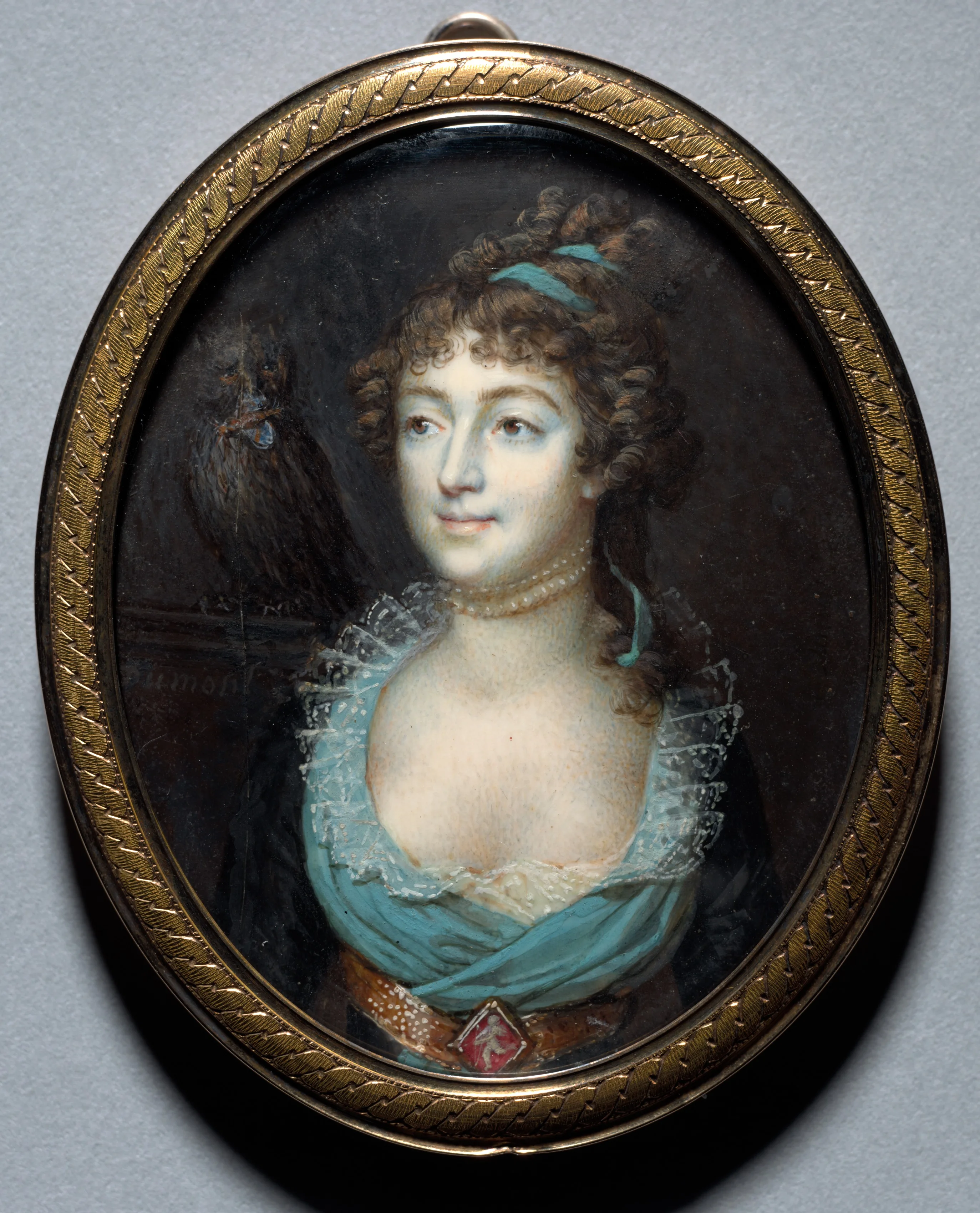
Portrait of Mademoiselle Marie-Anne Adelaide Le Normand
Cleveland Museum of Art Object Description Mademoiselle Marie-Anne Adelaide Le Normand, a famous Parisian fortune teller, was born in Alençon, France, between 1768 and 1772. Little is known of her early years, but by 1790 she had already established a strong following in Paris. Fortune telling was a highly lucrative field perhaps due to the extreme political unrest that permeated Paris in the 1790s. Although the practice of fortune telling was illegal at the time, people from the highest social classes sought Le Normand's services. She prophesied the bloody deaths of the French revolutionaries Maximilien Robespierre, Louis Antoine de Saint-Just, and Jean-Paul Marat when they visited her salon. Additionally, Alexandre Dumas was one of many to describe Le Normand's prediction of the monumental rise and fall of both Napoleon and his wife Josephine, who visited Le Normand's studio frequently. The fortune teller managed to retain her popularity through the Napoleonic era and the reign of King Charles X before retiring from Parisian life after correctly foretelling the outcome of the July Revolution in 1830. She moved back to Alençon and continued writing books of predictions until her death in 1843. Her greatest tangible legacy is a set of tarot cards known as the Blue Owl deck or Le Grand Jeu de Mlle. Le Normand. Grimaud, a self-proclaimed pupil of Le Normand, published the deck two years after her death. The accounts of Le Normand's physical appearance and her studio are almost as colorful as her predictions, and perhaps equally disputable. A description published in the late 1850s reported how "some thirty or forty volumes were arranged on the shelf against the wall, chiefly consisting of the works of the lady herself . . . Mademoiselle soon made her appearance-a short, fat little woman, with a ruddy face, overshadowed by the abundant curls of a flaxen wig, and surmounted by a semi-oriental turban, the rest of her attire being much in the style of a butter woman." Captain Rees Howell Gronow visited Le Normand between 1814 and 1830 and published his account in a book of recollections in 1865: "It was impossible for imagination to conceive a more hideous being. She looked like a monstrous toad, bloated and venomous. She had one walleye, but the other was a piercer. She wore a fur cap upon her head, from beneath which she glared out upon her horrified visitors. The walls of the room were covered with huge bats, nailed by their wings to the ceiling, stuffed owls, cabalistic signs, skeletons-in short, everything that was likely to impress a weak or superstitious mind." In "The Court of Napoleon," Frank Boot Goodrich noted that Le Normand's studio featured miniature portraits of the various rulers she patronized as well as a miniature of herself painted by Jean-Baptiste Isabey, court painter to Napoleon. The Cleveland Museum of Art's miniature does not reflect Le Normand's mythically monstrous appearance. She was in her early twenties when this miniature was painted. Perhaps the fortune teller chose François Dumont as the artist because he had recently produced several portraits of Marie-Antoinette, whom Le Normand admired greatly. Her dress and hairstyle here are reminiscent of the queen's in Dumont's 1792 portrait of her. A student of Jean Girardet, Dumont was one of the most exclusive French miniature painters of the late 18th and early 19th centuries and rendered many of the elite subjects of Le Normand's predictions; even if Dumont himself found no use for the prophetess's services, they certainly relied on similar clientele for their prosperity. The artist's inclusion of an owl eating a moth makes the CMA's miniature unusual. The owl often represents wisdom and was the companion of the ancient Greek goddess Athena. The ancient Romans were among many cultures to associate the nocturnal owl with the ability to predict death; even William Shakespeare called the bird of prey a "fatal bellman" in his play "Macbeth". These darker aspects of the owl make it an appropriate companion for Le Normand, who foretold the deaths of so many. Ashley Bartman (May 2014)
R
S
T
V
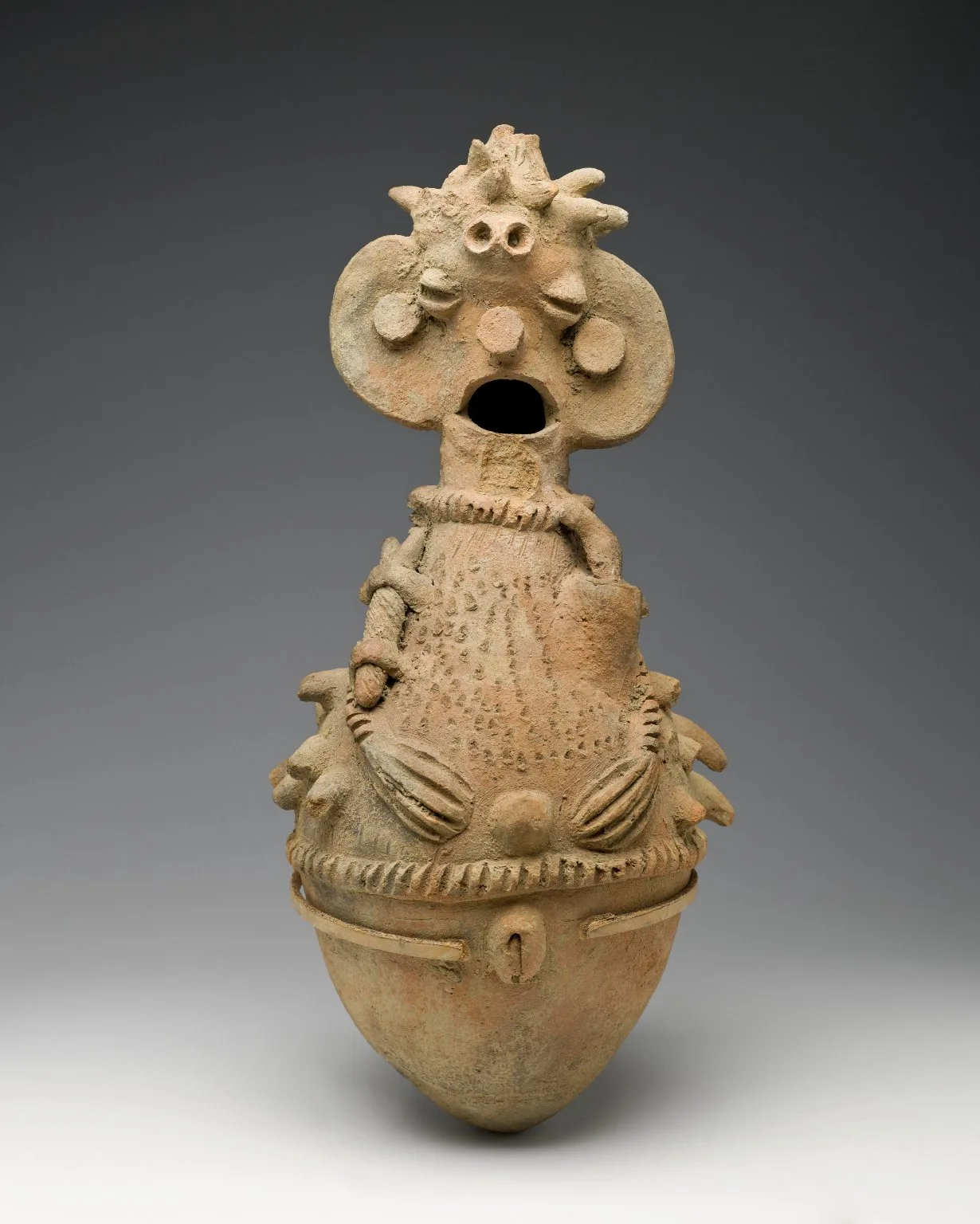
Vessel for Kwandalha Divination
Brooklyn Museum Object Description Hollow, egg-shaped terracotta vessel with a figurative head at the top of an elongated mouth. The body contains molded arms, a flute (?), belt, necklace, bumps (possibly indicative of an unattributed disease), navel and vulva added to the surface. The figure's arms rest on the belly of the vessel. The face has a large, ovoid mouth, two projecting half-circular ears, with round, flat ear plugs in each. A further ear plug is inserted above the mouth; another plug is missing from the lower lip. Eyes are formed in a molded, bisected coffee-bean shape. Two projecting nostrils sit above the eyes. The coiffure is composed of projecting tufts; several have been broken off. The surface has black firing marks, and is covered throughout by soil accretions. Condition: fair. This vessel was created for use in Longuda kwandalha healing divinations. After a ritual specialist determined the cause of a disease, the patient was given a newly modeled vessel, into which the disease was transferred. Such pots, which tend to embody the symptoms described, are remarkable for their highly expressive and imaginative forms.
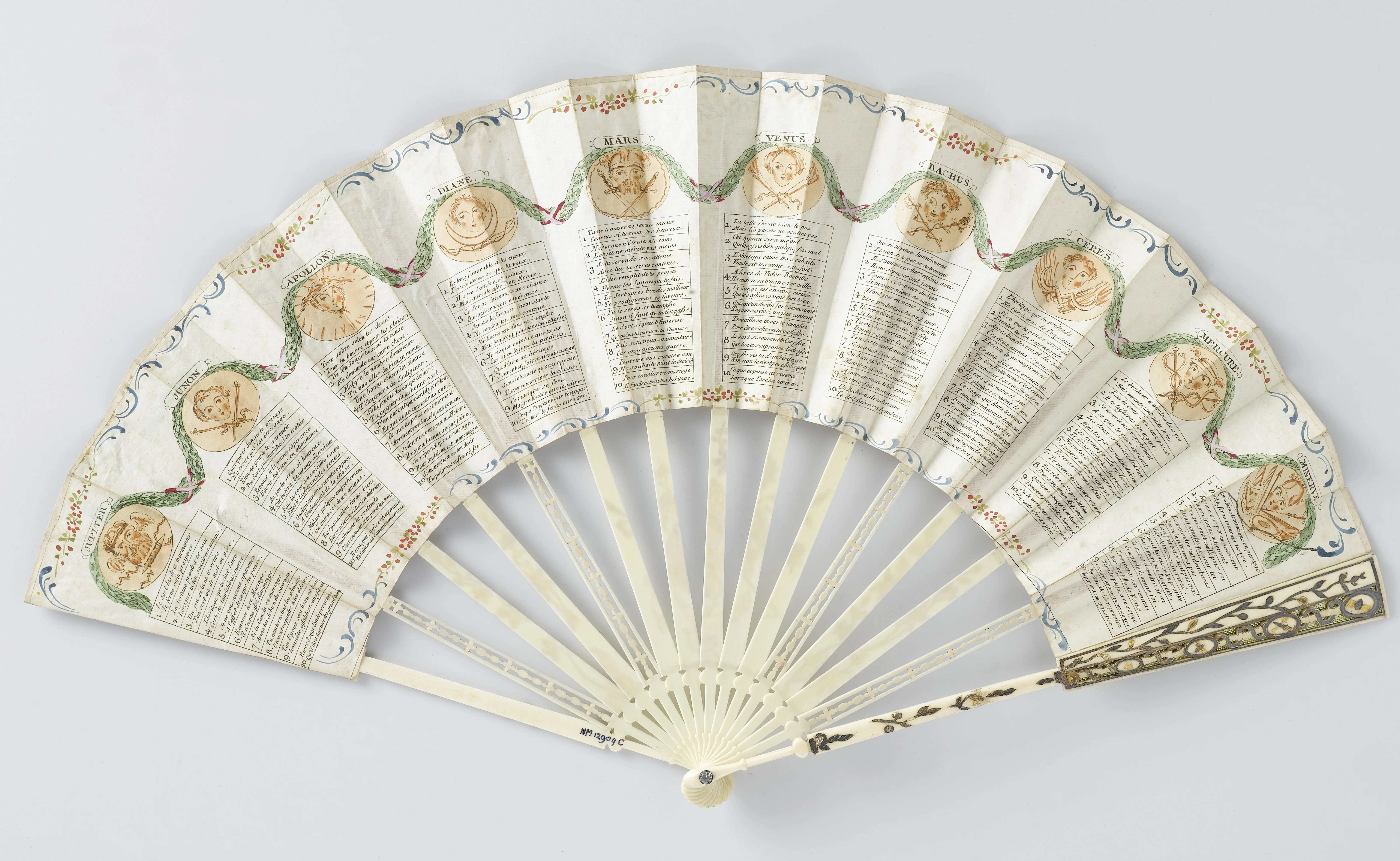
Vouwwaaier met twee papieren bladen, waarop het vraag- en antwoordspel "l'Oracle" is gedrukt en ingekleurd, op een gesneden ivoren montuur voorzien van 'métal en quattre couleurs'
Rijksmuseum Object Description Vouwwaaier met twee papieren bladen waarop het vraag en antwoordspel l'Oracle is gedrukt en ingekleurd, op een gesneden ivoren montuur voorzien van 'métal en quattre couleurs'. 15 niet aaneengesloten ajour bewerkte benen. De papieren bladen zijn bedrukt en beschilderd. Op de voorzijde staat een geluksrad en twee putti, die het opschrift l'Oracle vasthouden, centraal met aan weerszijden waarzeggerstabellen waaronder vragen in een cartouche. Op de achterzijde staan tien kolommen met godennamen en hun attributen. Met het vraag en antwoordspel 'Oracle' kon de toekomst voorspeld worden. Hiervoor waren twee getallen nodig: allereerst moest men het nummer van de vraag kiezen. Het tweede getal werd verkregen door met een ivoren pijl, die met een koordje aan de waaier hing (ontbreekt hier), blind te prikken in het rad van fortuin midden op de waaier. Het tweede getal verwees naar de lijsten met goden links en rechts van het rad, terwijl het eerste nummer werd gebruikt om in de betreffende lijst de vereiste god te vinden. Dan werd de waaier omgedraaid en zocht men in de lijst van de juiste gevonden god naar het getal, dat door het prikken in het rad van fortuin was verkregen. Op deze manier vond men dan uiteindelijk het antwoord.