
Chinese Needlework: Reading Between Lace and Embroidery
This collection gathers many different types of needlework made in China—ranging from Yuan dynasty embroideries from the 13th century to European-style lace produced by Christian organizations in the 19th century. Rather than assert places of origin, this curation underscores structural similarities between lace and embroidery. Venetian needle lace meets Chinese needle-loop embroideries, highlighting their technical kinships in order to propose that these textiles be read with more nuance and not simply as an outcome of Western imperialism. While learning to make lace, I began to notice the structural resonances between European needle lace and Chinese needle-loop embroidery; they are both composed of buttonhole stitches that intentionally create eyelet openings. Needle lace begins by using additional thread to secure looped threads into a foundational fabric or thick paper. The lace design is built up with looped threads and once the entire area is covered with the stitching, the initial stay-stitches are clipped, and the lace is detached from its foundations. Needle-loop embroidery, however, remains secured to its fabric backing and is sometimes stitched above gilded paper to allow the tiny holes to glimmer through the eyelet openings. After the Opium Wars (1839-1842 and 1856-1860), foreign entrepreneurs and Christian missionaries in China soon reemployed this looped stitch as needle lace.1 Was this technique recognized as the same looped embroidery used to render the heavenly clouds on Buddhist pendants and Taoist vestments, like those in this collection? While certain areas in China, such as Xiaoshan, became known for their Venetian needle lace imitations, this collection offers another perspective by grouping stereotypically Eastern and Western needlework together. A variety of European lacemaking traditions (including bobbin and filet crochet) arrived in China in the late 19th and early 20th centuries through the hands of missionaries and businessmen, but something like lace may have preceded Western colonization. While needle-loop embroideries, such as the Panel with Peonies and Butterfly, remain attached to a silk fabric support, needle lace is severed from its backing when completed. Such needle-looped stitches share the same basic foundation of needle lace, or punto in aria, stitches in air. Emerging from 16th-century Italy, this form of lacemaking, as seen in Ornament, broke away from the rectilinear restrictions of earlier lace techniques like cut or drawn work, allowing for more fluid designs and curved flourishes. Both the 14th-century panel from China and the 17th-century ornament from Italy share a similar dazzling diamond eyelet design. Upon a close study of their very structure, lesser known relationships reveal themselves through the delicate composition of looped stitches. They are more akin than one might initially realize. ___ 1. Miao, Huicui, and Feng Zhao. “Analysis on the Types of Lace and Drawnwork Introduced to Shanghai.” Asian Social Science 18, no. 3 (2022), pp. 8-11, https://doi.org/10.5539/ass.v18n3p8. Accessed 22 May 2022.
D
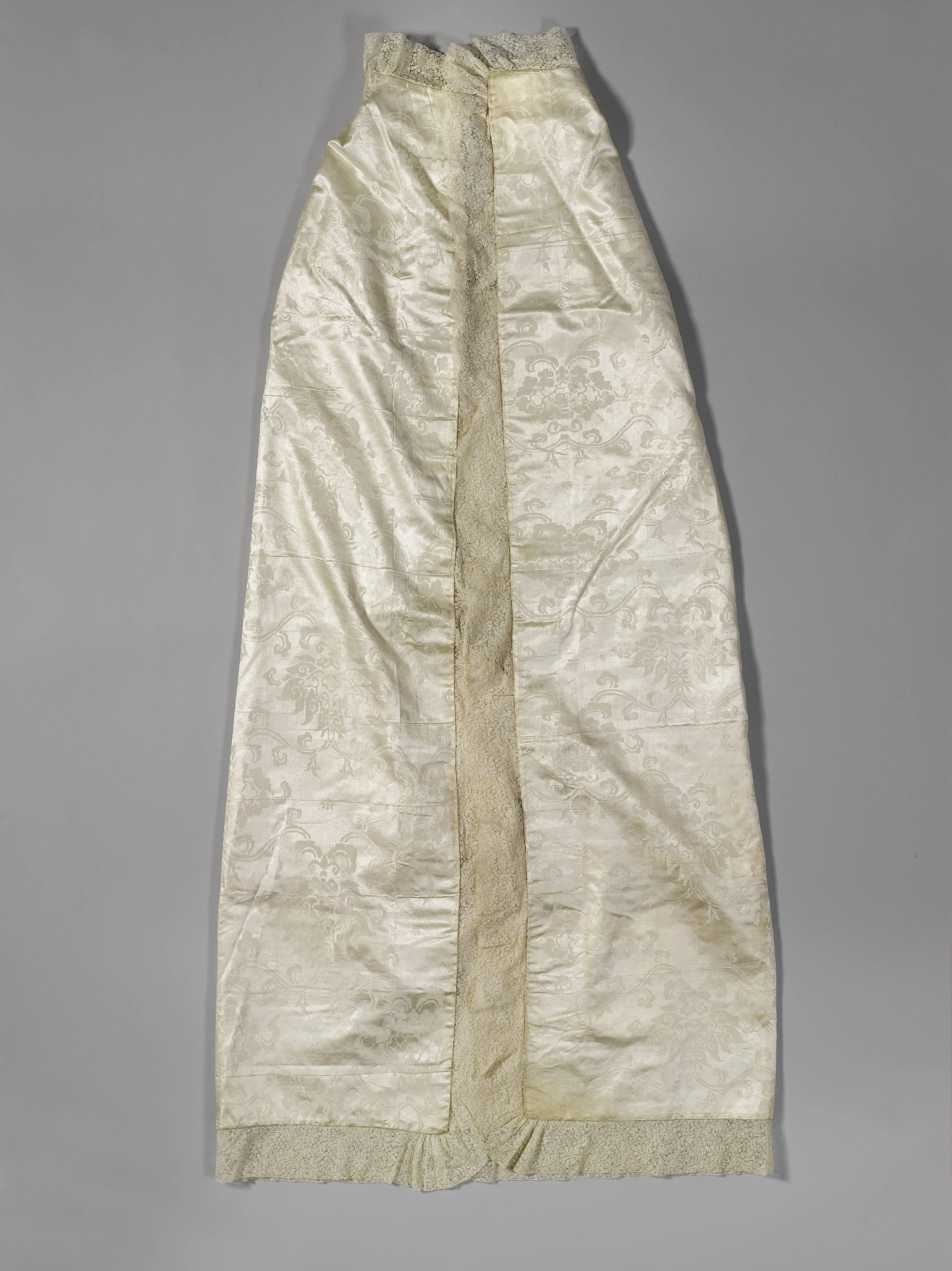
E
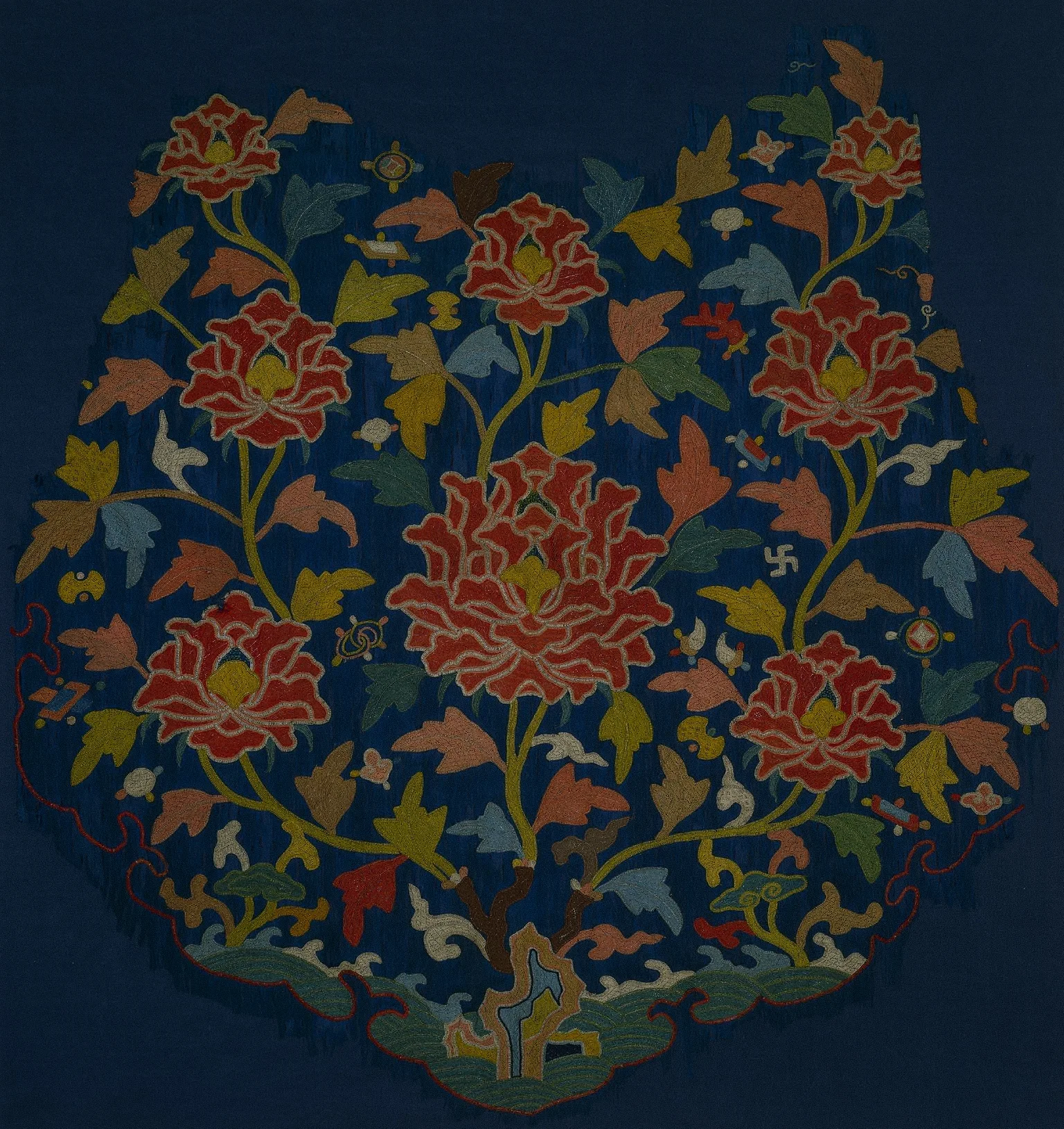
F
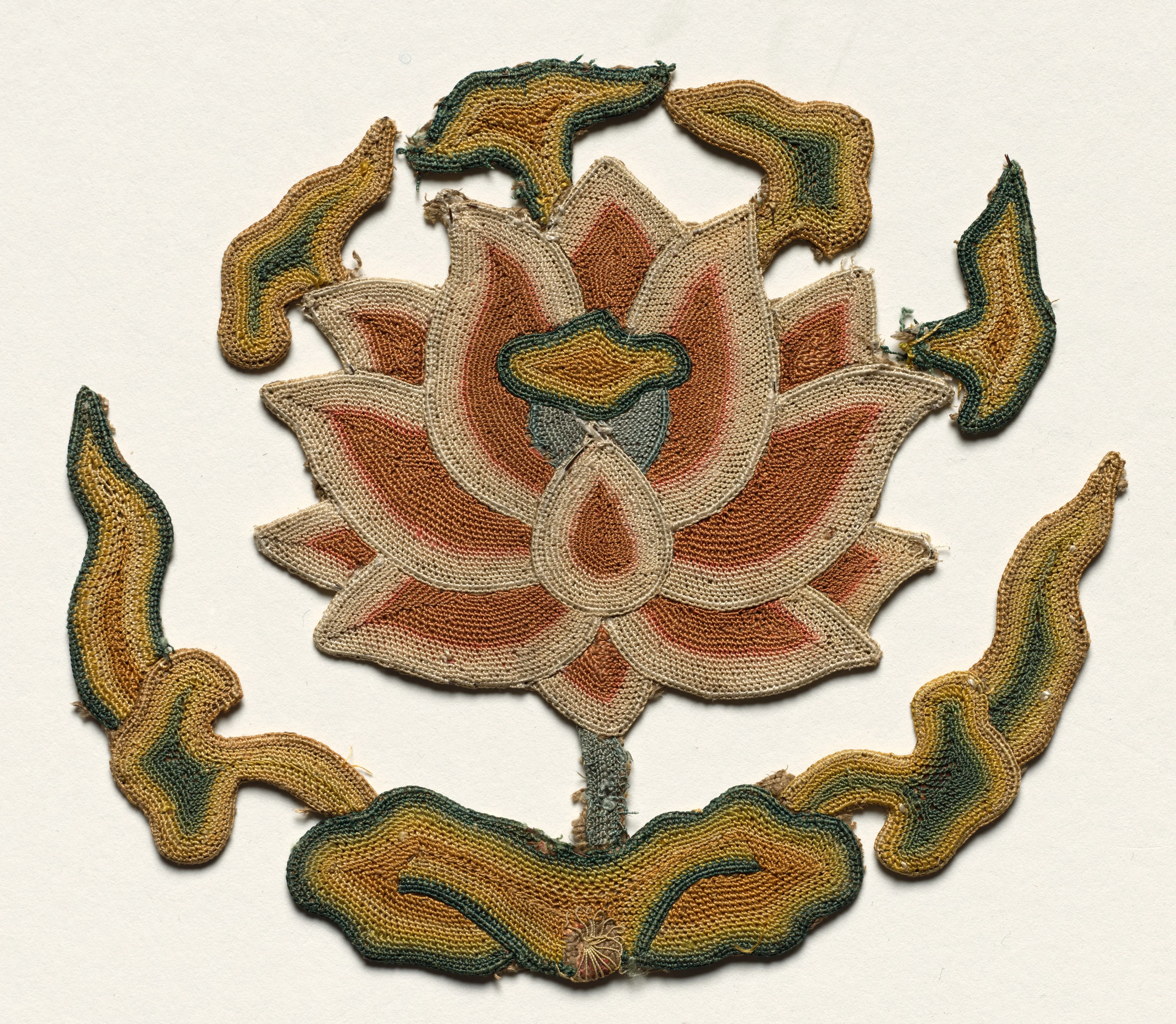
O
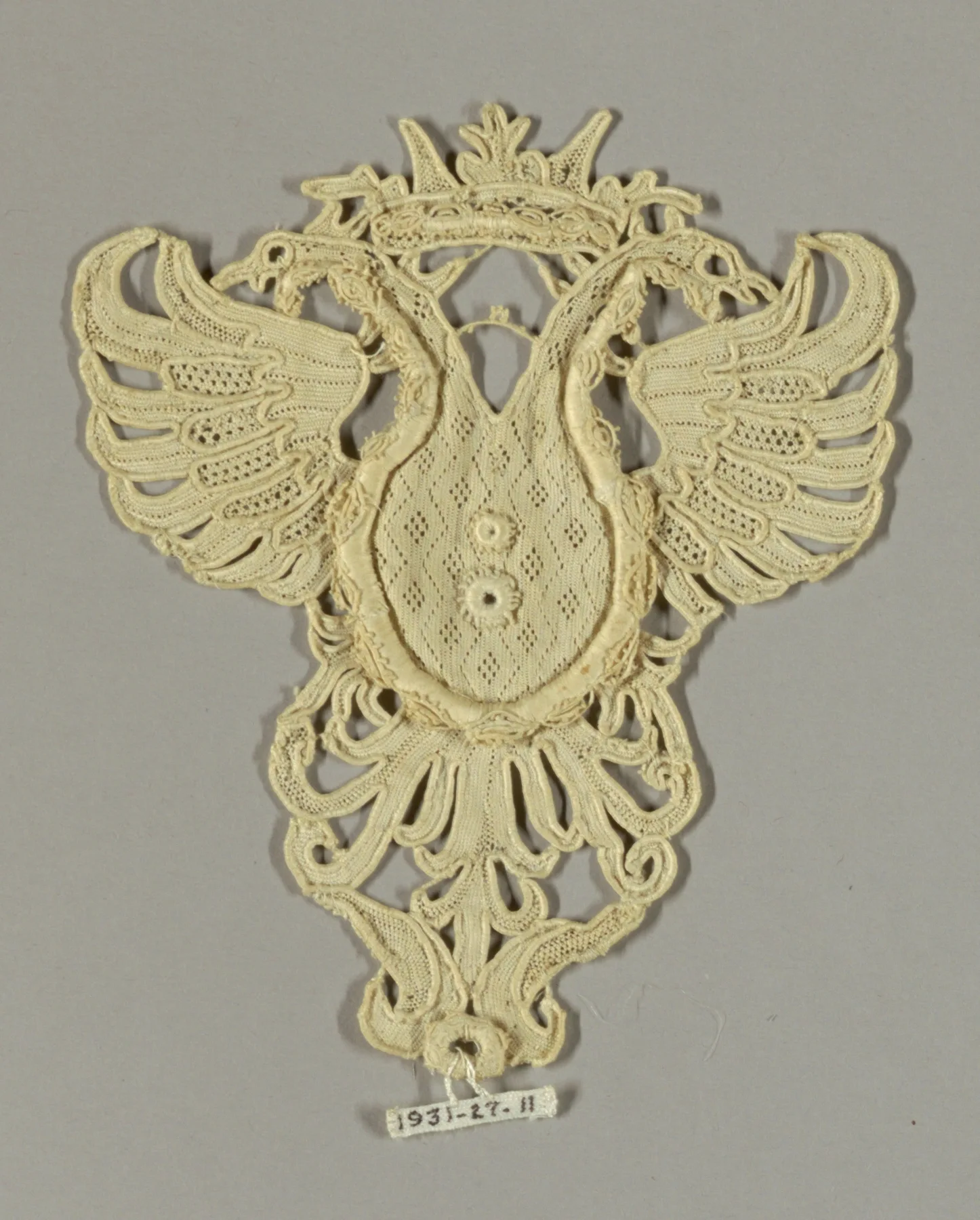
P
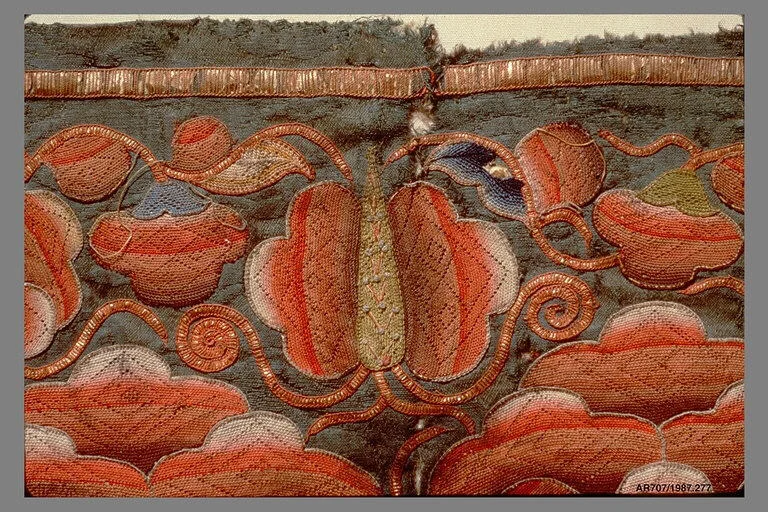
Panel with Peonies and Butterfly
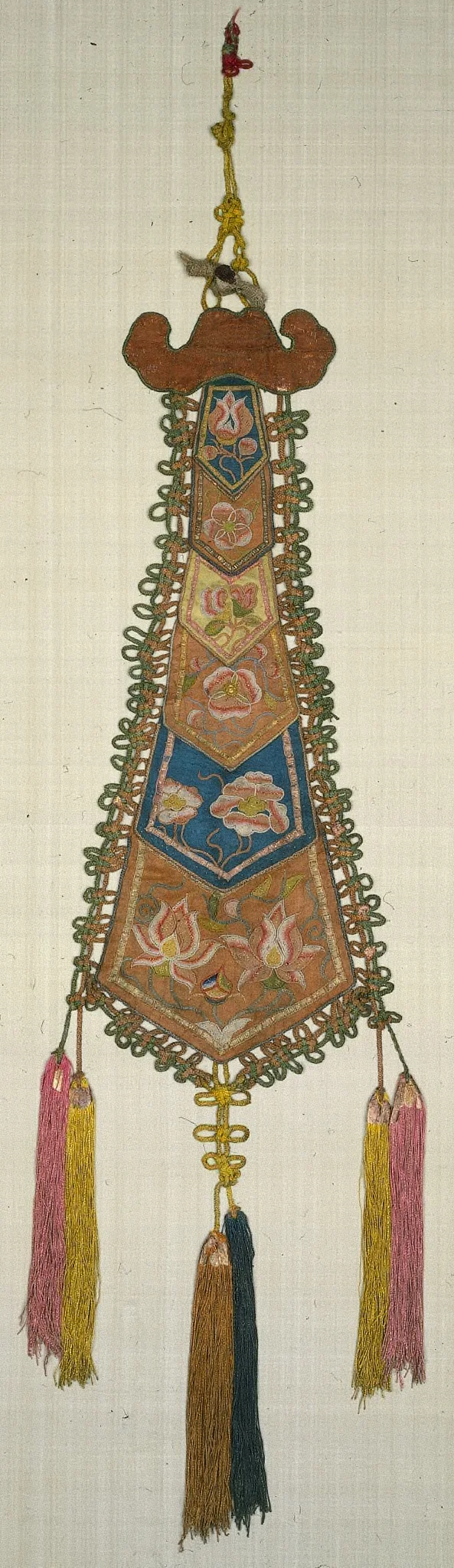
Pendant
Cleveland Museum of Art Object Description Pendants were used extensively in Buddhist settings where they were attached to almost anything needing decoration: ritual objects, canopies, valances, pillars, and other architectural components. They could be made in a variety of ways. This example consists of a heading and six tiers, each embroidered separately and then attached, one to the next. The earliest known pendant of this type was found in Central Asia and dates from the Tang dynasty (AD 618-907). The 14th-century date of this pendant is indicated by the style of the flowers.