
Small Museum Management: Practical Systems That Actually Scale
Practical small museum management systems that scale: improve collections control, documentation, workflows, and volunteer training with clear policies.
 Grzegorz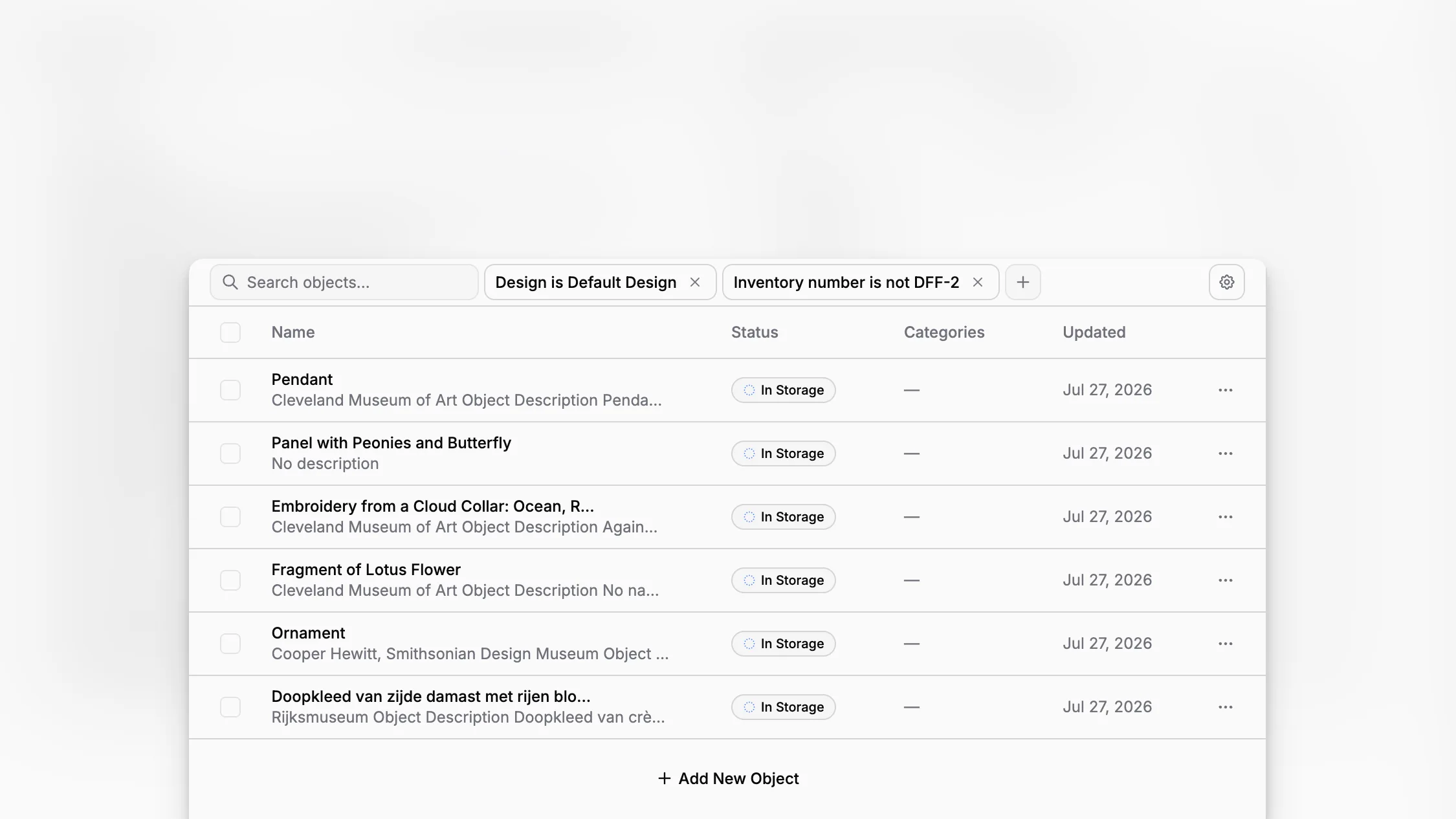
Small museum management is rarely a single problem. It is usually a stack of constraints: limited staff, inconsistent documentation, fragile collections, volunteer turnover, tight budgets, and a constant need to stay open to the public while improving back-of-house operations. The museums that run well are not necessarily the ones with the biggest teams. They are the ones with clear policies, repeatable workflows, and a collection management system that keeps records usable over time.
TL;DR: Good small museum management depends on disciplined basics: governance, collections policies, documentation, risk control, public access, and sustainable workflows. For many organizations, the biggest operational gain comes from centralizing records and procedures in one place, then training staff and volunteers to follow the same system every time.
What does small museum management actually include?
When people say “museum management,” they often mean everything from board governance to gallery labels. In a small museum, that overlap is real because the same person may handle accessions in the morning, admissions in the afternoon, and a donor call before closing. The practical scope usually includes collections stewardship, staff and volunteer coordination, financial oversight, visitor operations, interpretation, and compliance.
The strongest reference points still emphasize fundamentals. The National Park Service Museum Handbook frames museum work around documentation, accountability, care, and access, while the American Alliance of Museums collections stewardship standards make clear that owning collections creates legal, ethical, and operational obligations. Those expectations do not disappear just because a museum is small.
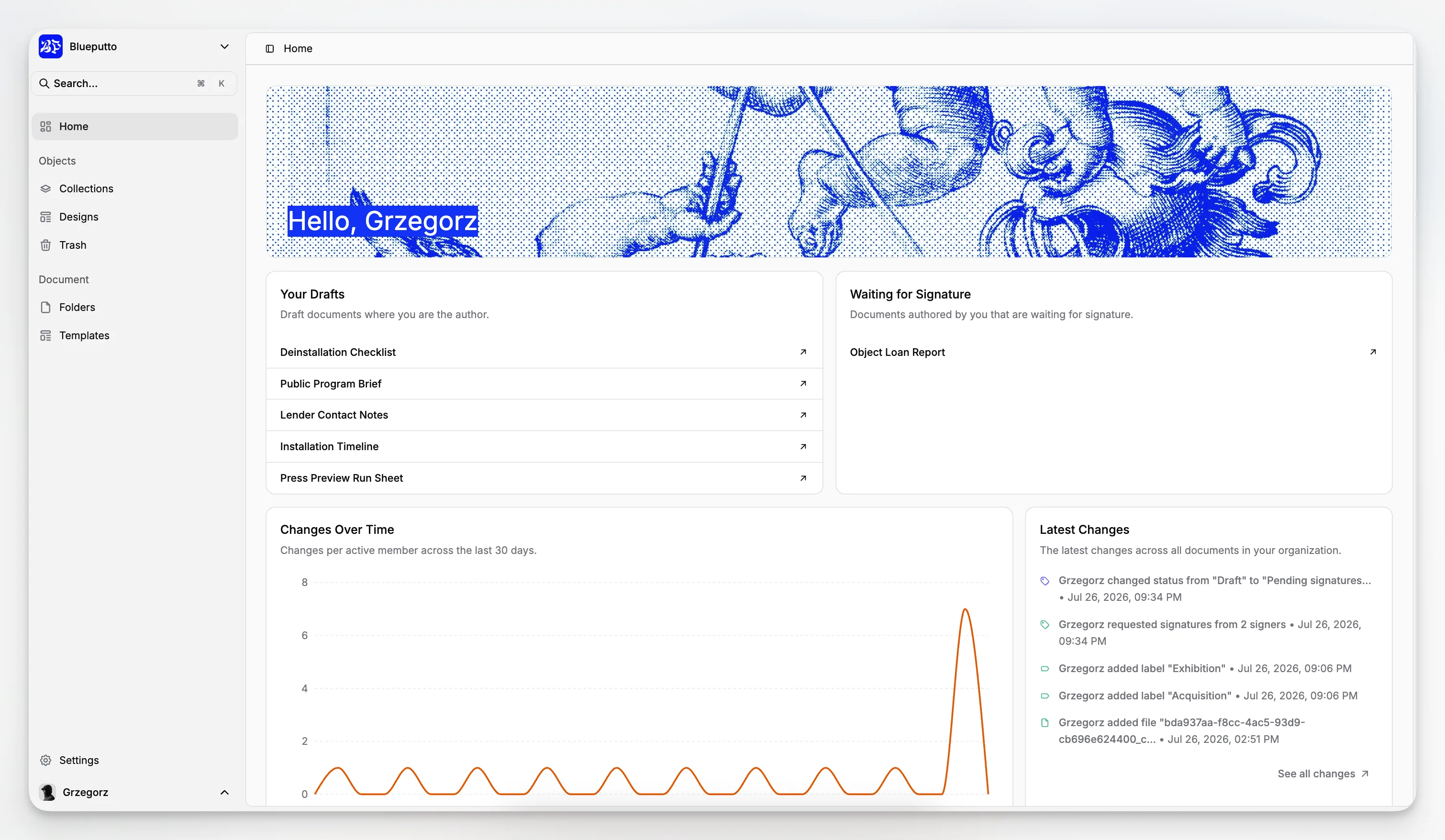
In practice, small museum management means deciding what must be done consistently, what can be simplified, and what should never depend on one person’s memory. That is why even modest institutions benefit from a structured platform such as Blueputto’s museum management software, especially when records, locations, files, and documentation need to stay organized across years rather than seasons.
Why do small museums struggle more with systems than with ambition?
Most small museums do not lack commitment. They lack slack. A volunteer-led historical society, a local heritage museum, and a single-site house museum may all understand best practices perfectly well, but still struggle to implement them because there is no extra hour, no backup registrar, and no tolerance for rework.
That pattern shows up repeatedly in small-museum guidance. The BC Museums Association Small Museum Toolkit treats leadership, governance, audiences, exhibits, and stewardship as interconnected responsibilities rather than separate silos. The University of Washington’s collections care toolkit for volunteer-based museums also highlights a reality many small institutions know well: volunteers are essential, but they need structure, training, and procedures if collections care is going to hold up.
The operational trap is easy to recognize:
accession records live in one spreadsheet;
location tracking lives in someone’s notebook;
old donor files are in a cabinet;
exhibit research sits in shared drives;
condition notes are partial or inconsistent; and
nobody is fully sure which record is current.
That is where process design matters more than heroic effort. A small museum becomes easier to run when routine tasks are standardized, permissions are clear, and collection records are not scattered across disconnected tools.
What are the core systems every small museum needs first?
Before adding new programs, major digitization projects, or complex reporting layers, most small museums should get a handful of management systems under control. These are not glamorous, but they tend to produce the biggest gains in stability.
1. A clear collections management policy
A formal policy is not optional bureaucracy. It defines scope, acquisitions, loans, deaccessioning, care, documentation, and roles. The AAM guidance on collections management policies is useful here because it connects policy directly to stewardship decisions and public accountability.
If your museum cannot answer “Why do we collect this?” or “Who can approve a loan?” without an informal conversation, the policy is not doing enough work.
2. A reliable collections database
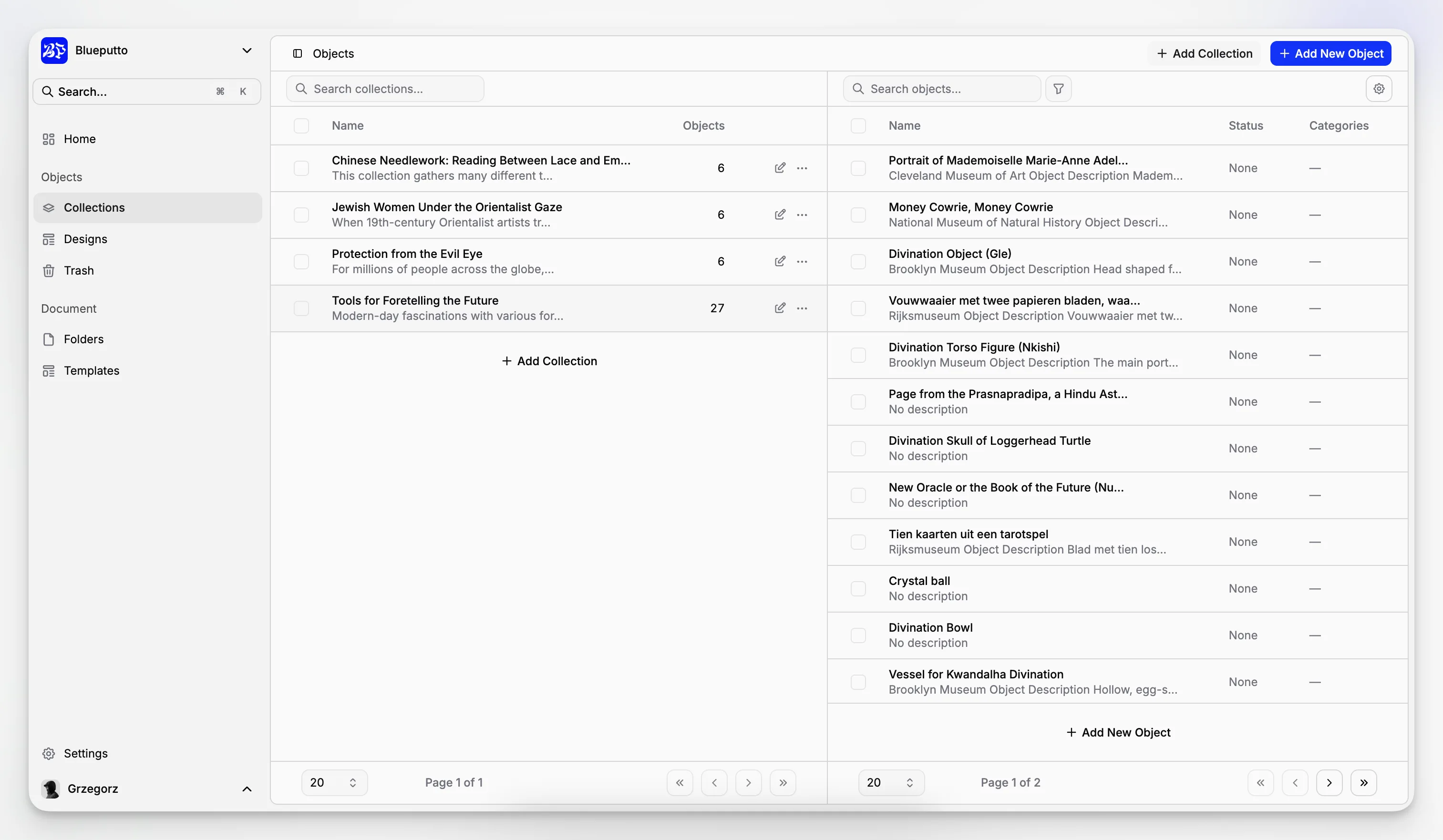
A database should help you find records, track locations, attach files, and maintain continuity. It should reduce ambiguity, not create a new technical burden. Blueputto emphasizes preserving collections, organizing records, and streamlining documentation on its public materials, which aligns closely with what small museums actually need from a practical collections platform. See Blueputto resources for how the platform frames long-term data growth.
3. Standardized object documentation
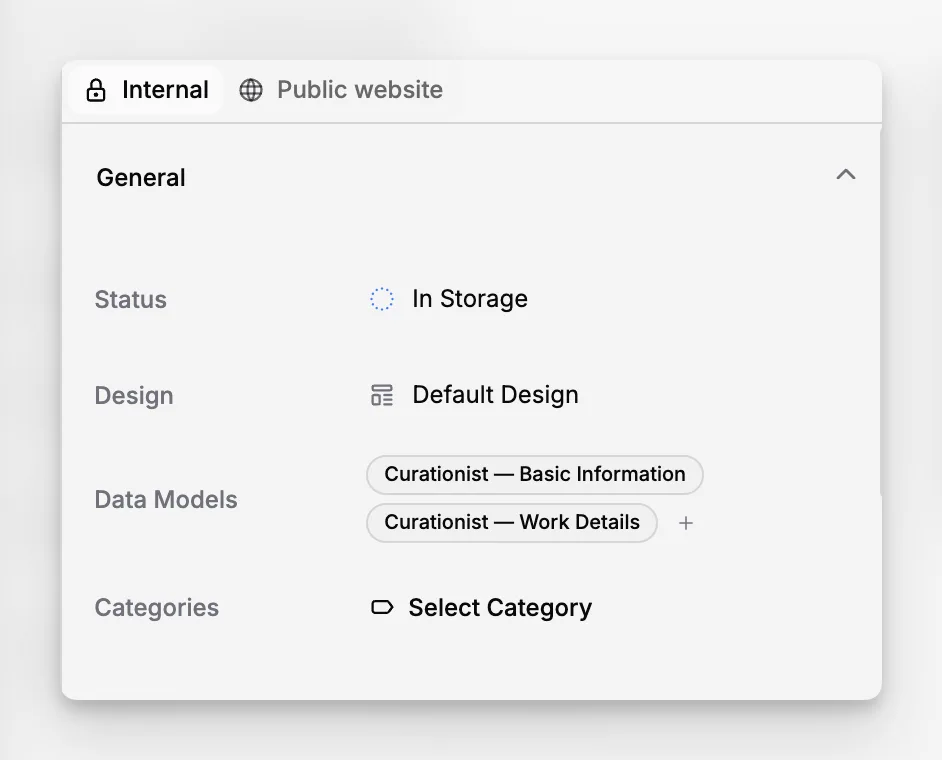
Every object record does not need to be perfect immediately, but every record should follow the same structure. Accession numbers, object names, provenance, dimensions, material descriptions, condition notes, rights information, and storage locations should be entered consistently.
4. Location and movement control
A small museum can lose enormous time to poor location tracking. Even if a collection is compact, objects move for exhibits, photography, research, cleaning, conservation, and loans. If those movements are not recorded, staff confidence drops fast.
5. Volunteer and staff procedures
The Connecting to Collections Care volunteer guidance is particularly relevant for small museums because collections work carries risk. Volunteers can support meaningful work, but only within defined procedures, supervision, and confidentiality boundaries.
How should a small museum organize its collections workflow?
Good workflow design starts with the life of an object, not the software menu. Think in terms of stages: acquisition, accessioning, cataloging, location assignment, condition review, storage, interpretation, exhibition use, loan activity, and periodic audit. If your current process cannot describe those stages clearly, staff will improvise, and records will drift.
A useful small-museum workflow usually looks like this:
Record incoming object information before the item is absorbed into routine storage.
Assign a unique identifier and note legal status.
Create a baseline catalog record with required fields.
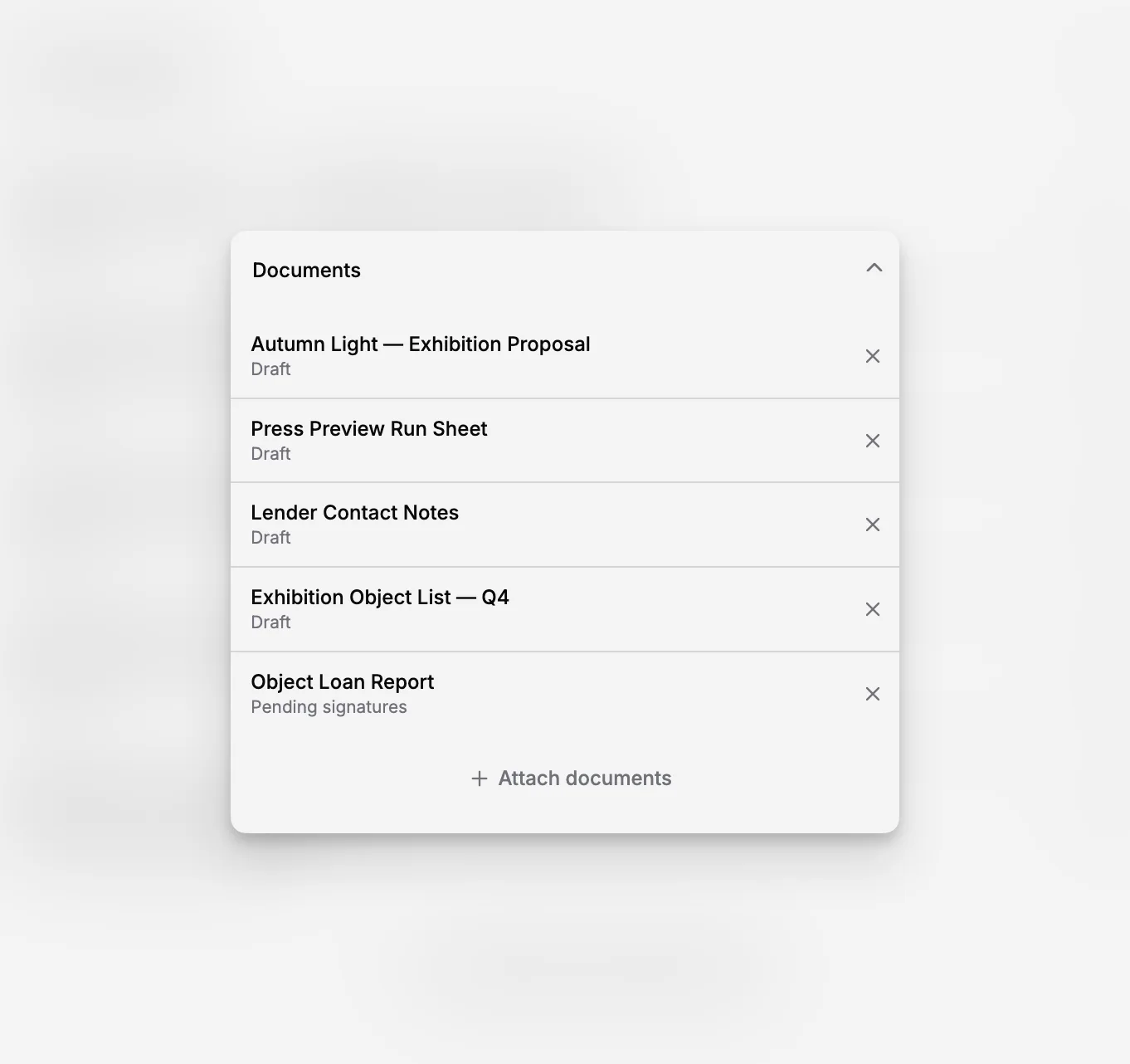
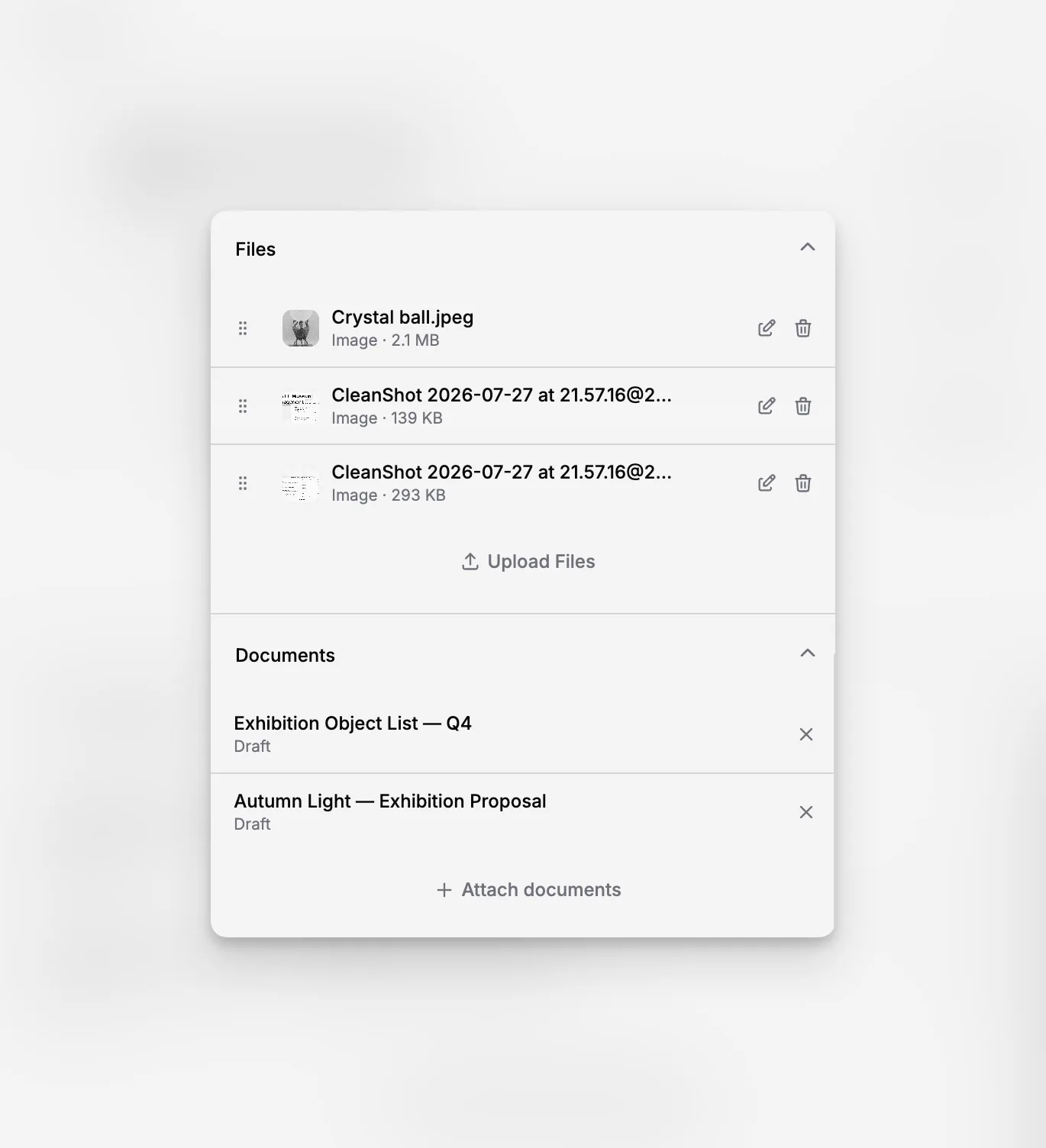
Attach documents, images, and donor correspondence.
Assign a precise storage location.
Record any condition concerns and handling limits.
Update movement history whenever the object changes location or use.
Review the record during inventory, exhibit prep, or conservation work.
This is where software should support the process rather than dictate it. Blueputto’s public documentation emphasizes growth across collections, archives, users, documentation, and locations, which matters because small museums often begin simply and become more complex without noticing it. A platform that can absorb new records and locations without forcing a workflow reset is genuinely useful in this context.
How do you balance access with preservation?
Small museums live in a constant tension between stewardship and access. Visitors, researchers, schools, and local donors often expect visible use of the collection. At the same time, preservation requires handling controls, environmental awareness, and realistic limits on what can be displayed or touched.
The best answer is not “say no more often.” It is “document better, plan better, and separate use cases.” The Texas Historical Commission’s museum handbook on running a museum and the Ontario collections standard both reinforce the need for policies and procedures that match the museum’s mission and capacity.
In practical terms, that means:
identify which objects are stable enough for exhibition or handling support;
record light, mount, pest, and environmental concerns in the object file;
use surrogates or digital records when direct access adds avoidable risk;
define who can approve outgoing loans or study-room handling; and
avoid exhibition schedules that outpace conservation reality.
A small museum often improves access by improving records first. If staff can quickly locate documents, images, rights information, and condition history, they can say yes more confidently and no more specifically.
What role do governance and policy play in day-to-day management?
Governance sounds abstract until a museum faces a contested donation, an unclear deaccession question, or a board request that conflicts with collections policy. In small museums, weak governance usually shows up as operational drift: inconsistent approvals, undocumented exceptions, mission creep, and pressure to keep everything forever.
Good governance does not mean the board manages the database. It means the board supports a clear mission, approves key policies, respects professional procedures, and understands the limits of available capacity. The collections should serve the mission, not the other way around.
That becomes especially important when staff are thin. If a director or collections manager spends too much time renegotiating basic policy questions, the museum loses time needed for documentation, preventive care, training, and public interpretation.
A practical approach is to keep three layers aligned:
mission and collecting scope;
policy and approval authority; and
operational procedures inside the museum’s working system.
When those layers stay connected, software becomes a governance aid rather than a storage bin for disconnected records.
How should small museums manage volunteers without creating risk?
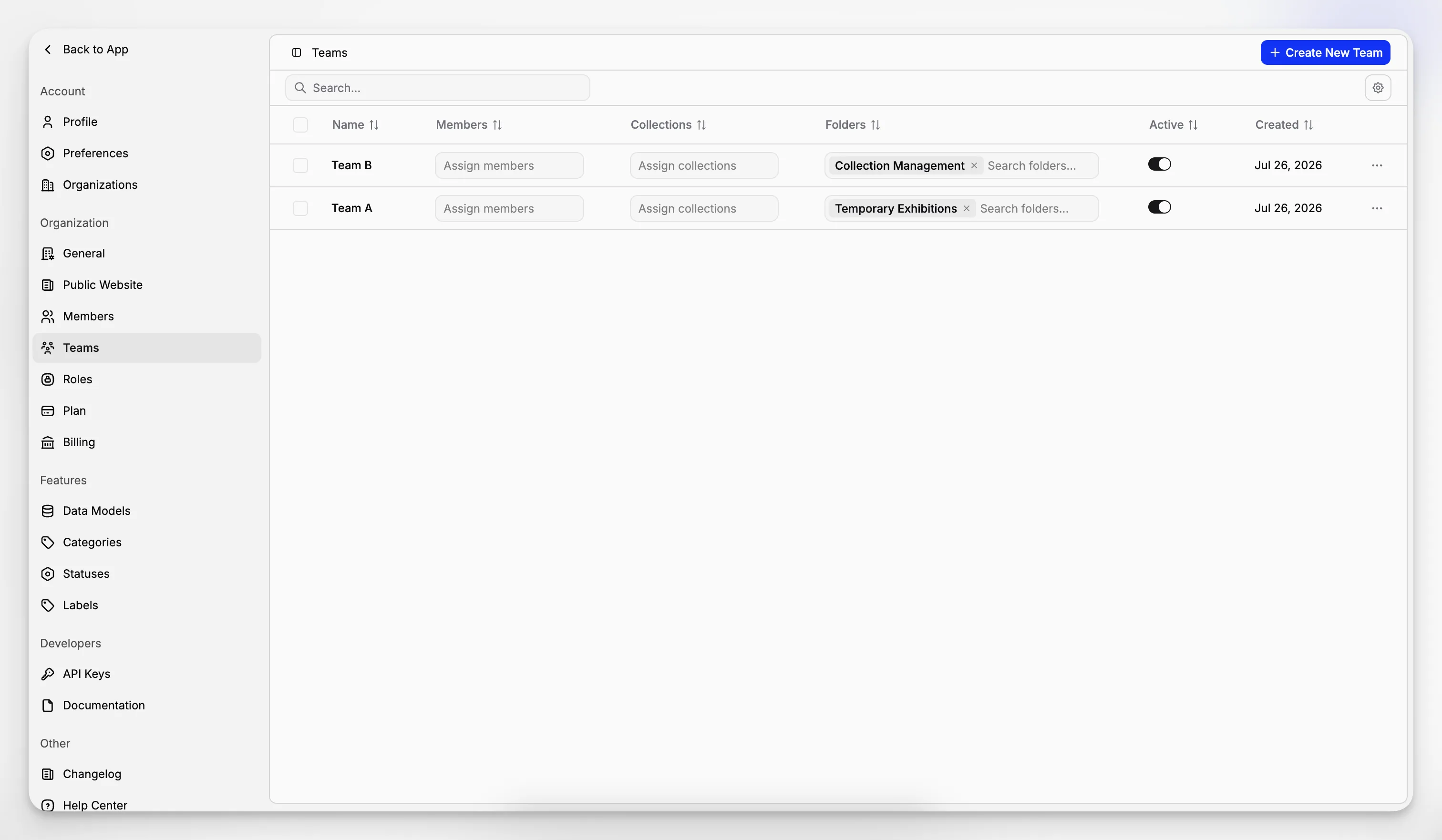
Volunteer help can be transformative, but only when the museum is ready to manage it. The common mistake is assuming goodwill substitutes for process. It does not. Volunteers need orientation, role definitions, task boundaries, and documentation standards, especially when they handle collections records, research files, or object movement.
The University of Washington collections care toolkit and Connecting to Collections Care both point toward a consistent lesson: volunteers can strengthen collections work, but only when museums provide the framework.
For a small museum, that usually means:
assigning volunteers to clearly scoped tasks;
creating written handling and documentation instructions;
reviewing sample work before scaling a project;
limiting permissions to what the role requires; and
ensuring one staff lead is responsible for decisions and quality control.
This is another area where a structured system helps. Instead of asking volunteers to interpret ad hoc folders and inconsistent spreadsheets, the museum can place them inside defined record templates and workflows.
What should small museums prioritize in collections documentation?
Perfection is not the goal. Usability is. Small museums often freeze because legacy records are incomplete, terminology is inconsistent, or old accession files are messy. The result is that nothing gets improved because everything feels too large to fix.
A better method is staged normalization. Start with the fields that make the collection workable:
unique identifier;
object name or title;
accession or custody status;
creator or maker when known;
date or period when known;
provenance or source;
dimensions and materials;
current location;
condition summary; and
rights or reproduction notes when relevant.
Then standardize controlled language gradually. The point is to make the records usable for inventory, exhibition planning, and research support. The NPS handbook remains helpful because it emphasizes accountability as much as description.
A modern platform can reduce friction if it makes those fields repeatable and searchable. Blueputto’s framing around organizing records and streamlining documentation is directly relevant here because a small museum’s biggest documentation problem is often inconsistency, not total absence.
How can a small museum plan for growth without overbuying software?
Small museums are often told to “future-proof” everything. That advice can be expensive and vague. A better standard is to choose systems that solve current needs well and can absorb reasonable growth in records, users, and locations.
Blueputto’s scaling documentation is useful because it frames growth in terms museums actually experience: more objects, more documentation, more staff, more storage locations, and more collaborative workflows. That is more realistic than pretending a small museum needs enterprise complexity on day one.
When evaluating software, ask:
Can the system handle more records without becoming harder to use?
Can we attach documents and media to object records?
Can multiple people work in it without breaking version control?
Can we reflect real storage locations and movement history?
Can we migrate legacy data without rebuilding the museum’s process from scratch?
The goal is not maximal feature count. It is operational continuity.
What are the most common mistakes in small museum management?
Small museums are usually punished less by dramatic failure than by quiet drift. The dangerous problems are often ordinary ones repeated for years.
Treating collections as permanent backlog
If uncataloged items, unidentified donations, and unresolved paperwork simply accumulate, risk compounds. Unknown legal status and missing provenance are management problems, not just cataloging problems.
Letting one person become the system
Many small museums run on institutional memory. That feels efficient until the staff member retires, burns out, or moves away. Procedures, naming conventions, and locations should live in the system, not in a single person’s head.
Accepting every donation
Mission drift often starts with donor pressure. A museum that collects beyond its scope will pay for that decision forever in storage, care, and documentation time. A policy-backed collecting scope protects both the museum and the donor relationship.
Separating exhibits from collections records
If interpretive work, loans, condition history, and object documentation are disconnected, exhibition preparation becomes slower and riskier than it should be.
Underestimating inventory work
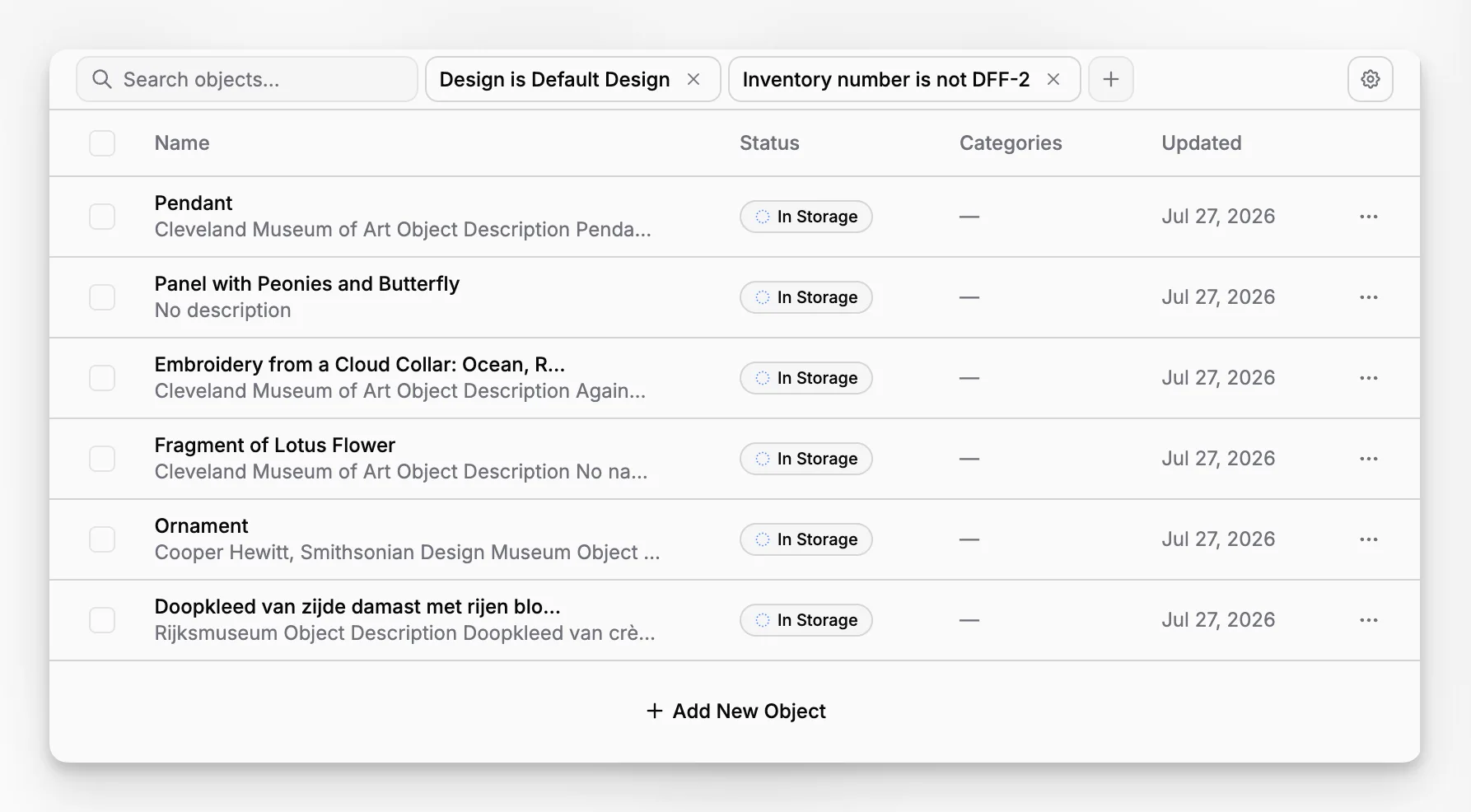
Inventory is not a cleanup project for “when things calm down.” It is a basic accountability function. Even rotating, partial, or location-based inventory can reveal missing data, unresolved moves, and storage issues before they become larger problems.
How do exhibits, interpretation, and public programs fit into management?
Collections care is central, but a museum is not a warehouse. Small museum management also includes making the collection understandable and useful to the public. Interpretation, exhibitions, school visits, and community programming are not separate from management; they are the visible outcome of it.
The BC Museums Association toolkit explicitly links interpretation and audience response with stewardship. That connection matters. When collections records are organized, a museum can build better exhibits, answer community questions faster, and prepare labels or research packets with less duplication.
This is where a system that supports files, object records, and long-term documentation can quietly improve the visitor-facing side of the museum. The more efficiently staff can retrieve accurate object information, the more time they can spend on interpretation rather than reconstruction.
A small museum should ask a simple question before every exhibit project: are we building knowledge that returns to the collection record, or are we creating one-off research that vanishes after deinstall? The first approach compounds value. The second creates repeated labor.
When is it time to replace spreadsheets and fragmented files?
Spreadsheets are not inherently bad. Many museums start there. The problem begins when spreadsheets become the institution’s only operating memory. Once records need attachments, movement history, collaborative editing, or reliable search across multiple categories, spreadsheets start creating hidden costs.
Signs it is time to move:
staff keep separate “working copies” of the same data;
object files cannot be easily tied to digital images or supporting documents;
location history is incomplete or informal;
reporting for exhibits, insurance, or inventories takes too long; and
onboarding a new volunteer or staff member requires oral explanation of basic record logic.
At that stage, migrating into a purpose-built system is less about modernization than risk reduction. A platform like Blueputto becomes useful because it reflects the fact that museums manage records over decades, not just during one project cycle.
How can a small museum implement a better system without overwhelming the team?
The safest implementation plan is phased and boring. That is a compliment. Big resets often fail because they try to fix governance, legacy data, digitization, and public access all at once.
A workable sequence is usually:
Phase 1: define rules
Confirm collecting scope, required fields, naming conventions, location format, and who can approve changes.
Phase 2: clean the essentials
Normalize core identifiers, locations, and legal status first. Do not start with obscure edge cases unless they block everything else.
Phase 3: migrate active records
Move the records most needed for routine work, exhibitions, research, and accountability.
Phase 4: train by task
Teach people how to accession, catalog, update locations, attach files, and review records inside the same workflow.
Phase 5: backfill legacy depth
Enhance older records over time once the live system is stable.
Blueputto’s public positioning around long-term growth is relevant here because phased implementation only works if the platform can start simple and remain useful as the museum expands. For small institutions, that is often more valuable than a dense feature list.
What does good small museum management look like after six to twelve months?
It usually looks less dramatic than people expect. You may not have a perfect catalog or a finished digitization program. But you should have fewer mysteries.
That means:
staff can find object records without hunting across drives;
locations are more trustworthy;
accession and cataloging decisions follow written rules;
volunteers work inside clearer boundaries;
exhibit prep uses existing documentation instead of starting over; and
leadership can see what is incomplete, not just feel that things are incomplete.
That is real progress. The point of museum management is not administrative elegance for its own sake. It is to create the conditions in which collections can be cared for, interpreted, and shared responsibly.
For many small museums, the right combination is modest but disciplined: strong policy, a manageable workflow, and one central system that holds the record. If you are evaluating tools, Blueputto’s documentation on scaling is a sensible place to start because it speaks directly to a familiar small-museum problem: today’s simple collection rarely stays simple for long.
What is the most important first step in small museum management?
For most small museums, the first step is clarifying policy and documentation standards. If collecting scope, approval authority, required record fields, and location rules are unclear, every later improvement becomes harder. Software helps most when those foundational decisions are already defined.
Does a small museum really need collection management software?
If the museum manages more than a very small number of objects, works with attachments or images, or relies on multiple people to maintain records, purpose-built software usually becomes worthwhile. The key benefit is not complexity. It is having one reliable place for records, files, locations, and workflows.
How should small museums work with volunteers on collections tasks?
Use volunteers in clearly defined roles with written procedures, task-specific training, and staff review. Avoid giving open-ended authority over collections decisions or undocumented handling. Volunteers are most effective when they work inside a structured system rather than filling gaps through improvisation.
What records should every object have at minimum?
At minimum, keep a unique identifier, object name or title, legal or accession status, source or provenance, current location, and a basic condition summary. As capacity improves, expand records with dimensions, materials, dates, images, rights notes, and related documents.
Can small museums improve management without a full-scale overhaul?
Yes. The most sustainable improvements are usually phased: standardize a few core fields, fix location control, centralize active records, train people by workflow, and then backfill legacy detail over time. Incremental consistency often produces better results than a large, disruptive reset.