

Statuses
Statuses organize object locations and conditions in Blueputto, with grouped, searchable labels for storage, display, offsite, and unavailable items.
 Grzegorz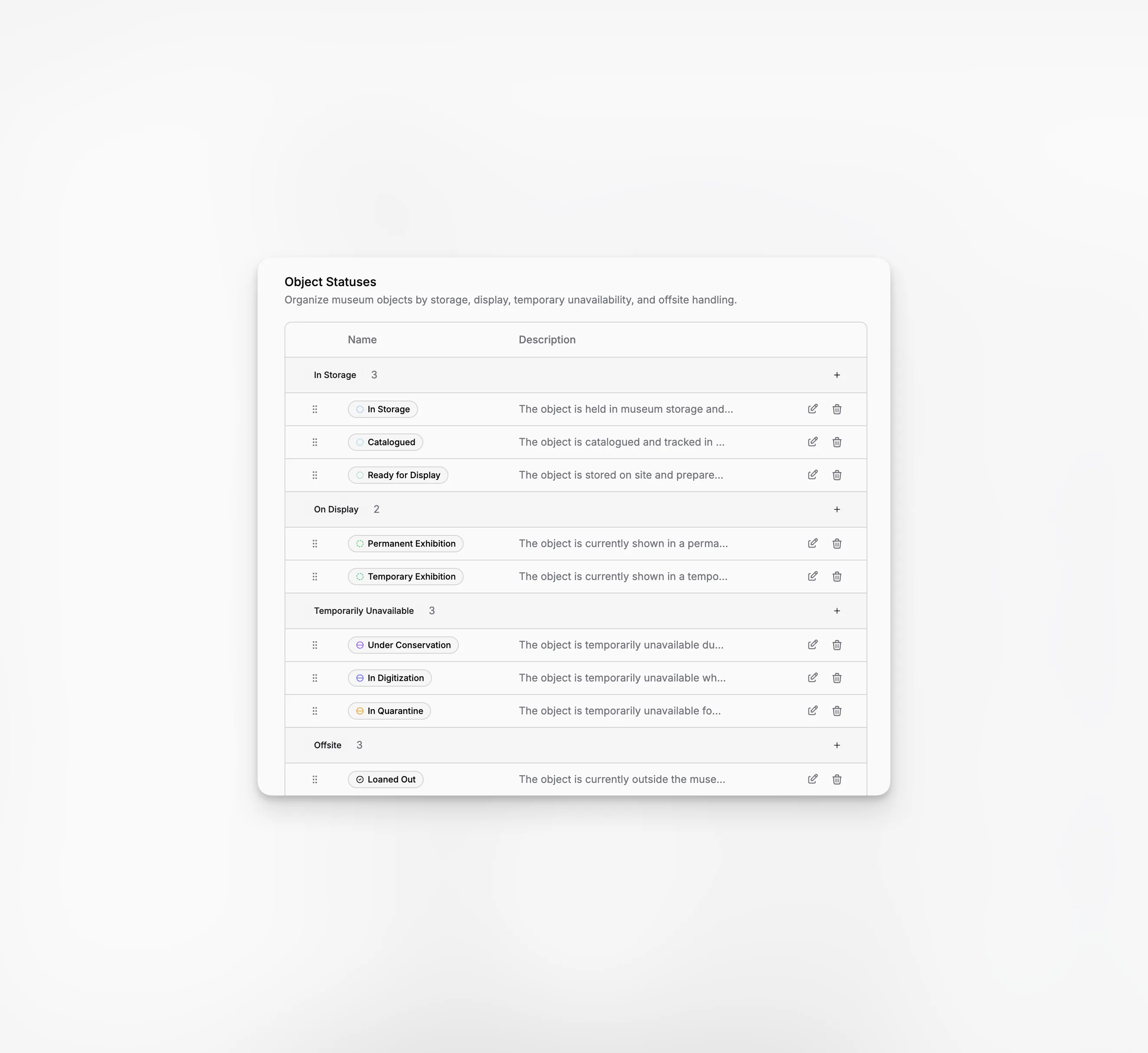
Statuses tell people what is currently happening with an object. They make important situations visible in the object list and on the record itself.
Group statuses by real-world situation
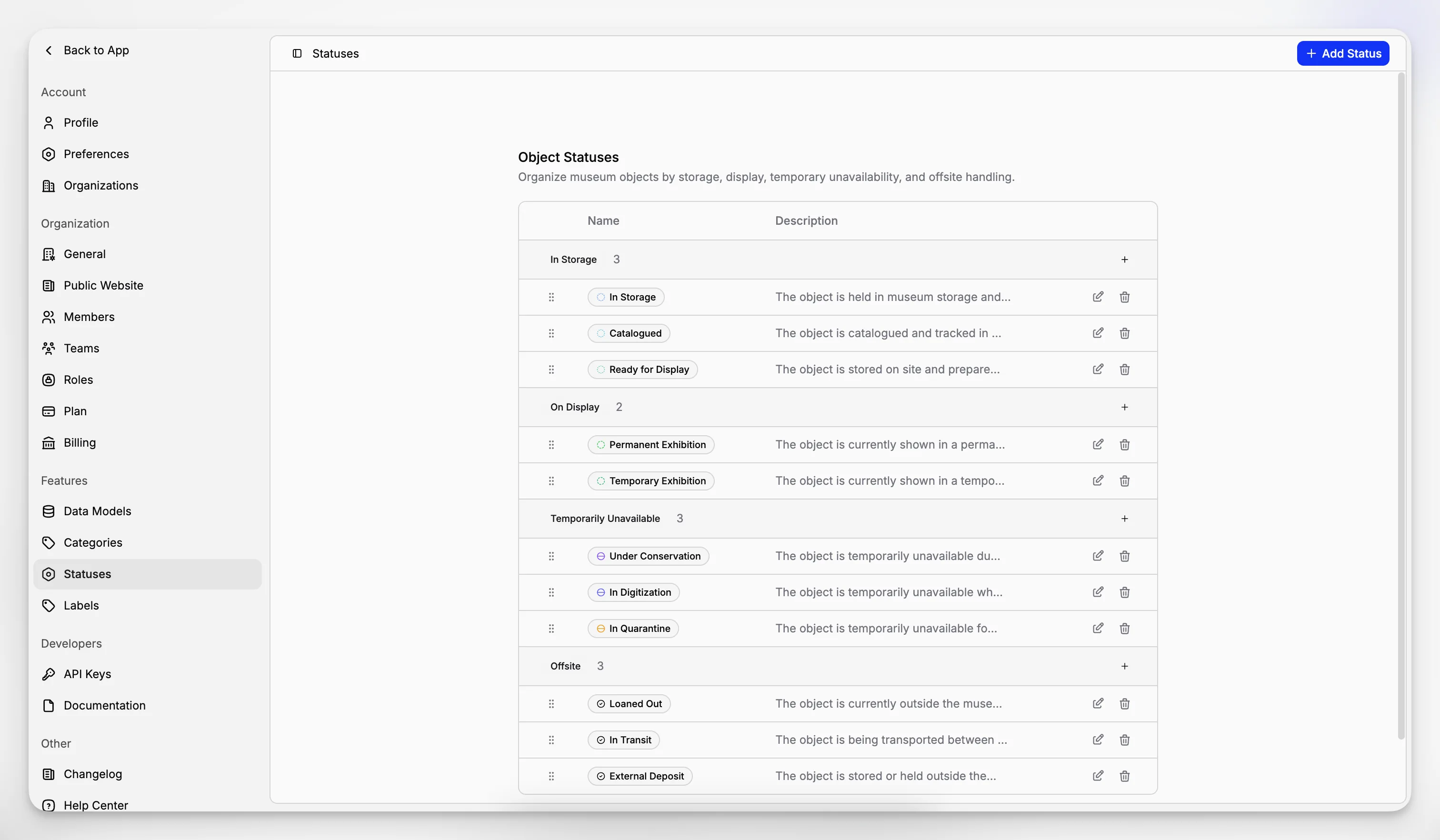
Every status belongs to one of four groups:
In Storage
On Display
Temporarily Unavailable
Offsite
Create more specific statuses inside these groups to match your work, such as a particular storage room, exhibition, conservation hold, or loan.
See status where work happens
An object's status is available on its record and in the main object table. This lets people understand the current situation before opening the full details.
Statuses can also be used as filters, which is helpful when preparing a list of everything on display, offsite, or temporarily unavailable.
Keep the list in a useful order
Reorder statuses within a group so the most common choices appear first. Names can be updated as terminology changes.
If a status is no longer needed, Blueputto helps you deal with objects that still use it before removal. This prevents records from losing an important piece of context without warning.